What Automatic Car Washes Do to Your Paint
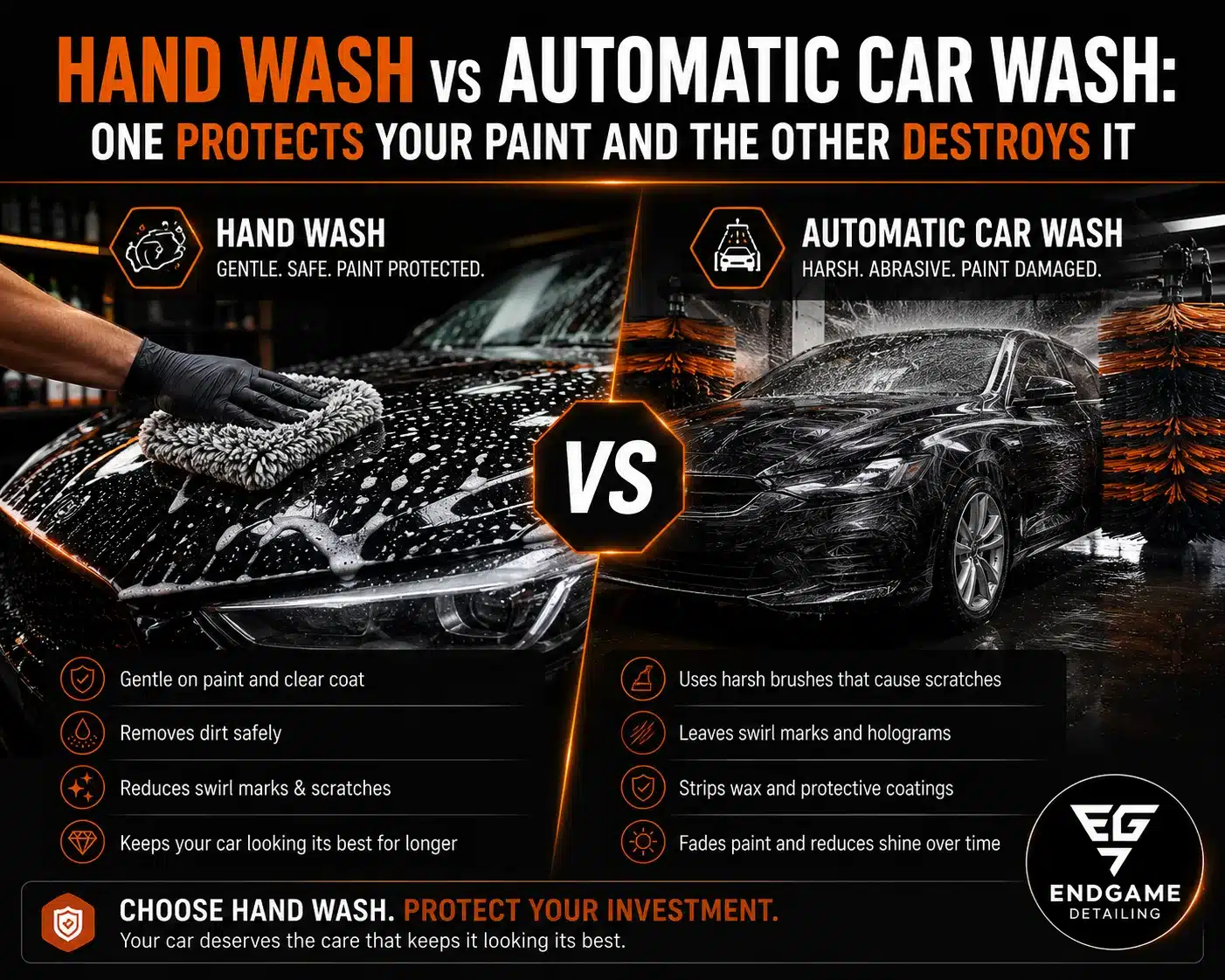
The problem with automatic car washes is not the water, the soap, or the drying process. It is the brushes. Every drive-through car wash with spinning brushes operates on the same principle: large rotating bristles or cloth strips make contact with the car’s surface to physically dislodge dirt.
Here is what actually happens during that process.
The brushes are never clean. The same brushes that just washed the car before yours, which may have been caked in mud, sand, road grime, or construction dust, now drag across your paint. Every particle of grit from the previous car becomes an abrasive that scratches your clear coat.
The contact pressure is excessive. Brushes are designed to spin fast and press firmly enough to remove heavy dirt. This is far more pressure than is needed for a maintained car and far more than the clear coat can absorb without marking. The result is a network of fine circular scratches (swirl marks) that become visible under direct sunlight or car park lighting.
The drying process adds more damage. Many automatic washes use large spinning chamois or cloth strips for drying. These operate on the same principle as the brushes: high contact pressure with potentially contaminated material dragged across the paint.
Touchless washes are better but not perfect. Touchless automatic washes use high-pressure water and strong chemical detergents instead of brushes. They avoid the physical scratching problem but use harsher chemicals that strip wax, sealant, and can degrade ceramic coating over time. They also leave water spots because the drying is rarely thorough enough to prevent mineral deposits forming.
“We can tell within seconds of putting a car under our studio lights whether it has been through automatic car washes. The swirl pattern is distinctive: dense, uniform, covering every panel in the same circular pattern. One wash might not be visible. But after a year of weekly visits, the paint looks five years older than it should.”
The Real Cost of Automatic Car Washes
A weekly automatic car wash costs roughly $15 to $25 per visit. Over a year, that is $780 to $1,300. Over three years, it is $2,340 to $3,900.
Now add the cost of fixing the damage those washes caused.
| Factor | Automatic Car Wash (3 Years) | Hand Wash (3 Years) |
|---|---|---|
| Wash cost | $2,340 to $3,900 (weekly visits) | $300 to $600 (products and equipment) |
| Paint condition after 3 years | Dense swirl marks, dulled finish, reduced gloss | Minimal to no wash-induced damage |
| Correction needed | Multi-stage paint correction ($800 to $2,000+) | Minor single-stage polish or none |
| Total 3-year cost | $3,140 to $5,900+ | $300 to $600 |
| Resale appearance | Visibly worn, needs correction before sale | Well-maintained, enhances resale value |
The automatic car wash is not saving you money. It is costing you more by creating damage that requires professional correction to fix. The cut and polish cost guide and car detailing cost Sydney guide cover what correction costs when the damage has accumulated.
How Proper Hand Washing Works
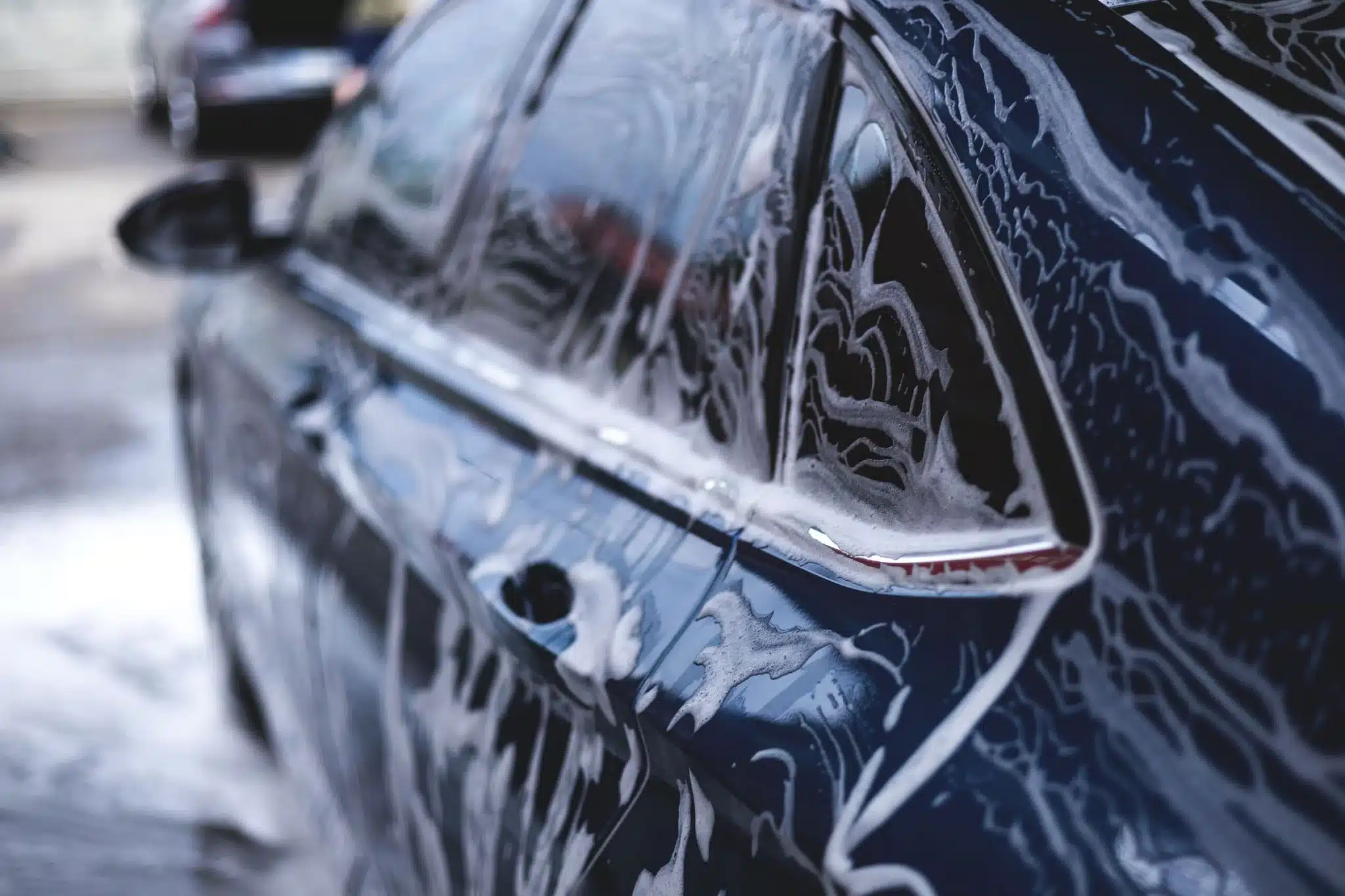
A proper hand wash follows a method that cleans the car thoroughly without introducing new scratches. The key principles are: never let contaminated wash media touch the paint, use lubrication (soapy water) between the mitt and the surface, and rinse grit away before it can scratch.
The Two-Bucket Method
This is the foundation of safe hand washing.
Bucket one: wash solution. Fill with clean water and the recommended dilution of a pH-neutral car shampoo. This is where your wash mitt gets loaded with soapy water.
Bucket two: rinse. Fill with clean water only. After each pass across the car, rinse the mitt in this bucket to release the dirt it picked up. Then reload from the wash bucket. This prevents grit from being carried back onto the paint.
Optional: grit guard inserts. Plastic grit guard inserts sit at the bottom of each bucket. When you rinse the mitt, the guard catches the dirt and keeps it at the bottom of the bucket, away from the mitt.
Step-by-Step Hand Wash Process
Pre-rinse. Use a hose or pressure washer to rinse the entire car, removing loose dirt, sand, and debris before anything touches the paint. This is the step most people skip, and it is the most important. Rubbing a mitt over a dusty or sandy panel without pre-rinsing grinds the particles into the paint.
Wash from top to bottom. Start with the roof, then windows, upper panels, and work down to the lower panels and wheel arches last. The lower sections are always the dirtiest, so washing them last prevents you from transferring road grime to the cleaner upper panels.
Use straight-line motions. Move the wash mitt in straight lines, not circles. Circular motions create the classic swirl mark pattern. Straight-line scratches (if any occur) are far less visible than circular ones.
Rinse the mitt after every panel. Dunk the mitt in the rinse bucket, agitate it to release the dirt, squeeze it out, then reload from the wash bucket. Never go from panel to panel without rinsing.
Dry with quality microfibre. Use a clean, large, plush microfibre drying towel. Pat or blot rather than dragging the towel across the surface. A good drying towel absorbs water without applying the pressure that causes marring.
Washing a Ceramic-Coated or PPF-Protected Car
If your car has ceramic coating, graphene coating, or PPF, proper hand washing is even more important because it maintains the protection system’s performance.
Ceramic and graphene coated cars should only be washed with pH-neutral car shampoo. Harsh detergents, dish soap, and the chemicals used in automatic washes strip the coating’s hydrophobic properties over time. A properly maintained coating repels water and dirt for years, but only if the washing method does not degrade it. Full aftercare is covered in the how to maintain ceramic coating guide.
PPF-wrapped cars require hand washing to avoid damage to the film edges. High-pressure water directed at PPF seams and edges can lift the film, and the spinning brushes in automatic washes can catch and peel film edges. Always wash PPF by hand using the two-bucket method, and avoid directing high-pressure water at joins and edges.
Never use an automatic car wash on a coated or PPF-wrapped car. The brushes will scratch the coating’s surface (reducing hydrophobic performance) and the chemicals will accelerate coating degradation. One visit to a drive-through wash can undo months of coating performance.
For broader protection advice, read the complete how to protect car paint guide and ceramic coating vs wax comparison.
What About Waterless and Rinseless Washes?
For lightly dusty cars that have not accumulated heavy dirt, waterless and rinseless wash products offer a middle ground.
Rinseless wash products (like Optimum No Rinse) use a highly lubricated solution that encapsulates dirt particles and lifts them away from the surface without a traditional rinse. You dip a microfibre towel in the solution, wipe the panel, and the product prevents the encapsulated dirt from scratching. This is an excellent maintenance wash for ceramic-coated cars between full washes.
Waterless wash products are sprayed directly onto the surface and wiped off with a microfibre towel. These are only safe on very lightly dusty cars. Using them on a car with any real dirt or grit will create scratches because the lubrication is not sufficient to prevent particle drag.
Neither method is a substitute for a full two-bucket wash on a dirty car. They are maintenance tools for cars that are already relatively clean and protected.
Common Washing Mistakes That Damage Paint
Even hand washing can cause damage if done incorrectly. Avoid these common mistakes.
Using one bucket. A single bucket means every time you rinse the mitt, you are putting grit back into the same water you are using to wash. By the third panel, you are washing with gritty water.
Not pre-rinsing. Rubbing a mitt over a dusty panel without rinsing first is essentially sanding the paint with the dirt that is already on it.
Using dish soap. Dish soap is designed to strip grease. On a car, it strips wax, sealant, and degrades ceramic coatings. It also dries out rubber trim and plastic. Always use a dedicated pH-neutral car shampoo.
Washing in direct sun. Water and soap dry on the surface before you can rinse them off, leaving water spots and soap residue that bond to the paint. Wash in shade or in the early morning/late afternoon. For information on removing existing water spots, read the water spot removal guide.
Using old or dirty towels. A dirty microfibre towel is just as abrasive as a dirty wash mitt. Use clean towels every wash. Wash them separately from household laundry without fabric softener (which reduces absorbency).
Drying by dragging. Dragging a towel across the surface under pressure creates drying marrs, a type of fine scratch caused by friction. Pat, blot, or use a filtered forced-air dryer instead.
For car owners dealing with existing swirl marks and scratches from years of automatic washes, professional paint correction removes the accumulated damage and restores the finish. Read the car detailing before and after guide to see what correction achieves.
Which Wash Method Is Right for You?
| Situation | Best Wash Method | Why |
|---|---|---|
| Daily driver, no protection | Two-bucket hand wash weekly | Prevents new damage while keeping the car clean |
| Ceramic or graphene coated car | Two-bucket hand wash with pH-neutral shampoo | Maintains coating performance without degradation |
| PPF-wrapped car | Hand wash only, gentle on edges | Protects film integrity and prevents edge lifting |
| Lightly dusty between full washes | Rinseless wash with microfibre | Quick, safe maintenance without a full wash setup |
| Show car preparation | Full hand wash, clay bar, detail spray | Maximum cleanliness before events or photography |
| Any car, any condition | Never an automatic brush wash | The damage is cumulative, permanent, and entirely avoidable |
For detailed guidance on wash frequency and ongoing care, read how often should you detail your car.