What is Engine Bay Detailing and Why Does it Matter?
Engine bay detailing in Sydney is the professional cleaning, degreasing, and protection of your vehicle’s engine compartment. It is not a car wash. It is not something you can replicate with a garden hose and a can of degreaser from the servo.
Your engine bay accumulates years of grease, road grime, oil residue, dust, and heat-baked contaminants. Over time, this build-up does real damage. It traps heat, hides fluid leaks, accelerates corrosion, and degrades rubber hoses and plastic covers.
Most Sydney car owners focus all their attention on what people can see: the paint, the interior, the wheels. The engine bay gets ignored until something goes wrong.
That is usually when the repair bill arrives.
“Most people don’t think about the engine bay until there’s smoke or a smell. By that point, the damage is already done. A clean bay lets you see exactly what’s happening under the bonnet.” – Senior detailing technician, Western Sydney workshop
How Much Does Engine Bay Detailing Cost in Sydney?
Engine bay detailing in Sydney typically costs between $100 and $250, depending on your vehicle size and how long the bay has been neglected.
Here is a straightforward cost guide:
| Vehicle Type | Estimated Cost (Sydney) | Time Required |
|---|---|---|
| Small car / hatchback | $100 to $130 | 45 to 60 minutes |
| Sedan / mid-size | $120 to $150 | 60 to 90 minutes |
| SUV / 4WD / ute | $150 to $200 | 90 to 120 minutes |
| Performance / show car | $180 to $250+ | 2 to 3 hours |
| Undercarriage detail add-on | $100 to $150 extra | Additional 60 min |
Note: Heavily neglected bays with years of built-up grease may attract a higher rate due to extra time and product required.
Compared to what undetected leaks, overheating, or corroded components can cost you at the mechanic, a regular engine bay detail is genuinely one of the better investments you can make in your car.
For a broader look at what professional detailing costs across different services, check out this Sydney car detailing cost guide which breaks down pricing across all major services.
What Affects the Price of a Cut and Polish?
Several factors will move the final price up or down.
1. Vehicle Size
Larger surface area means more product, more time, and more labour. A small hatchback and a full-size 4WD are not the same job, even if the paint condition is identical.
2. Paint Condition
A car with light swirling from normal use is a different job to one with heavy oxidation, multiple deep scratches, or years of untreated wash marks. Worse condition means more cutting stages and more time on the machine.
3. Paint Colour and Type
Dark colours like black, dark blue, and dark grey show swirls and defects far more clearly than lighter shades. They also require more careful technique and slower work to avoid heat build-up. Soft paints, common on European and Japanese vehicles, cut differently to harder factory paints.
4. Number of Polishing Stages
A single-stage polish handles light imperfections. A two-stage process adds a heavier cutting compound first, then refines with a finishing polish. A two-stage cut and polish is a comprehensive service that addresses deeper defects and provides a more thorough correction. The Detail Maestro More stages means better results on damaged paint, and a higher cost to reflect the additional time.
5. Whether Decontamination Is Included
A proper cut and polish should always start with a thorough wash, decontamination, and clay bar treatment. This removes bonded contamination from the paint surface before any machine polishing begins. Some lower-priced services skip this entirely, which affects how the compound cuts and how long the result lasts.
What Does an Engine Bay Detail Include?
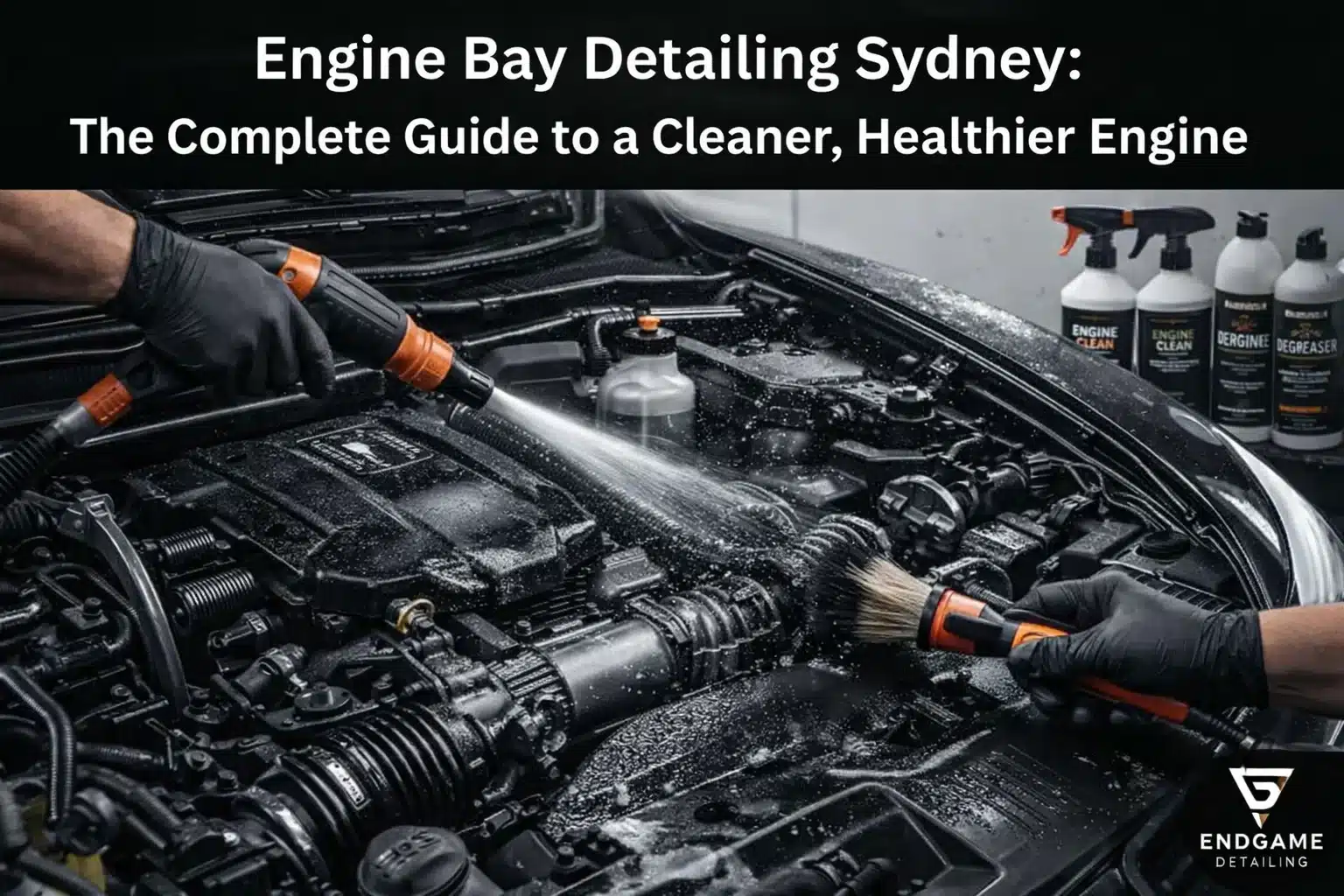
A professional engine bay detail is a multi-step process. Here is exactly what is involved:
Inspection and preparation:
- Full visual inspection to identify fluid leaks, cracked hoses, worn belts, and loose wiring
- Masking and covering of the alternator, battery terminals, fuse box, air filter housing, and any exposed wiring
Cleaning:
- Compressed air or soft brush removal of loose debris, leaves, and dust
- Application of professional-grade biodegradable degreaser to engine covers, hoses, brackets, and the engine block
- Agitation using soft detailing brushes to work into tight crevices, corners, and behind components
- Steam clean or controlled low-pressure rinse to remove all degreaser and contaminants
Drying and finishing:
- High-powered blower to remove standing water from all surfaces and recesses
- Hand drying with microfibre towels, with extra attention around electrical housings
- Application of protective matte or satin dressing to all plastics, rubber hoses, and covers
- Final inspection and removal of masking materials
For show car preparation, additional steps include metal polishing on exposed engine components and full detailing of every visible surface for competition-level presentation. You can see what a full show car detailing service looks like when the standard is the highest level of finish possible.
The Engine Bay Detailing Process: Step by Step
Here is the full professional process broken down simply:
- Inspect the engine bay, identify leaks, damaged components, and sensitive electrical areas
- Mask the alternator, battery, fuse box, air intake, and any exposed wiring connectors
- Remove loose debris with compressed air or a dry soft brush before any liquid is applied
- Apply degreaser across all surfaces of the bay, engine block, hoses, plastic covers, and brackets
- Agitate with detailing brushes, working the product into every corner and crevice
- Steam clean or rinse at low pressure, working away from electrical components at all times
- Blow dry with a detailing blower to remove standing water from every recess and gap
- Hand dry with microfibre towels, paying particular attention around any wiring and housings
- Apply dressing to all plastic covers, rubber hoses, and engine trim to restore appearance and protect against cracking
- Final inspection: remove all masking, check for missed areas, and report any mechanical concerns spotted during the clean
This structured approach is what separates a professional engine bay detail from a DIY attempt that risks water damage to electrical systems.
8 Reasons Your Engine Bay Needs a Professional Detail
Most car owners are surprised by how many problems a clean engine bay prevents. Here is why it matters:
- Easier leak detection: Oil, coolant, and brake fluid leaks are invisible in a grimy bay. A clean bay shows up problems immediately.
- Better cooling: Grease and grime trap heat against engine components. A clean bay improves airflow and thermal efficiency.
- Longer-lasting hoses and seals: Rubber degrades faster when it sits in oil and chemical residue. Protective dressing after a clean significantly extends component life.
- Higher resale value: A spotless engine bay signals to any buyer that the car has been genuinely well-maintained. It builds trust that no amount of exterior polish can replace.
- Fire risk reduction: Accumulated oil and grease near hot exhaust components and electrical systems creates a genuine fire hazard.
- Early problem identification: Technicians spot cracked hoses, worn belts, and loose connections during the clean that the owner had no idea about.
- Complete vehicle presentation: For show cars, pre-sale preparation, and luxury vehicles, the engine bay is part of the full picture. Anything less than clean lets the whole car down.
- Corrosion prevention: Road salt and moisture trapped in a grimy bay accelerate metal corrosion on brackets, bolts, and exposed components.
If you are preparing your car for sale, a clean engine bay combined with professional pre-sale car detailing gives you the best possible chance of achieving your asking price.
Engine Bay Detailing vs DIY: What You Risk Doing it Yourself
It is tempting to grab a can of degreaser and a pressure washer and do this yourself. Here is why that approach goes wrong more often than not:
Common DIY mistakes:
- Spraying water directly onto the alternator or fuse box causes shorts, corrosion, and expensive electrical failures
- Using too much pressure forces water into sealed connectors, sensor housings, and behind plastic trim
- Applying harsh chemical degreasers without rinsing properly leaves residue that damages rubber and plastics over time
- Not drying properly traps moisture in recesses that then causes rust on metal brackets and component housings
- Missing the masking step entirely, which is the most critical part of a safe engine clean
A professional technician knows which components need to be covered, what pressure is safe, which products are appropriate, and how to dry the bay completely before finishing.
The risk of an expensive electrical repair is simply not worth saving $100 to $150.
Is It Worth Getting a Cut and Polish Before Selling Your Car?
Yes, and the numbers support it. A car with clean, glossy paintwork photographs better, presents better in person, and commands a higher asking price.
Paint that looks dull, swirled, or neglected immediately signals to a buyer that the car has not been well maintained, regardless of its mechanical condition. A professional cut and polish removes that perception entirely.
Pre-sale car detailing in Sydney is one of the highest-return investments a seller can make before listing a vehicle. The improvement in first impressions consistently justifies the cost.
Before and After: What a Professional Engine Bay Detail Actually Does
Before: layers of baked-on grease on the engine block, discoloured and dry-cracked rubber hoses, plastic covers stained brown-grey from oil mist and dust, debris collected around the battery and in every corner of the bay.
After: a clean engine block with restored colour, dressed rubber hoses that look factory-fresh, plastic covers back to their original deep black, and a bay that is genuinely inspection-ready.
Here is a real example of what the process achieves:
A Nissan Skyline GT-R that had not had its engine bay touched in six years came in with severe grease accumulation across the entire RB26 engine, cracked and faded hoses, and a badly stained firewall. After a full degreasing, steam clean, blow dry, and protective dressing, the bay was unrecognisable. The owner also discovered a small coolant weep from a hose fitting that had been completely hidden under the grime.
That discovered leak, caught early, saved a potential overheating failure on the road.
You can see results like this in the project gallery to get a real sense of what a professional detail achieves across different vehicle types.
What Services Pair Well with Engine Bay Detailing?
An engine bay detail is one of the best entry points into a broader detailing package. While the car is already in the workshop, these services are commonly added at the same time:
- Paint correction: Removing swirl marks and surface scratches before protection is applied. See the full paint correction Sydney service.
- Ceramic coating: Long-term paint protection that makes maintenance dramatically easier. Explore the ceramic coating Sydney options.
- Interior detailing: A complete engine detail makes much more sense alongside a full interior car detailing service for a total vehicle refresh.
- Paint protection film: For new cars especially, pairing engine bay detailing with paint protection film gives you complete vehicle protection from day one.
- Car steam cleaning: Steam is used in both services. Bundling car steam cleaning with an engine bay detail is a popular and cost-effective combination.
- Headlight restoration: Often overlooked alongside the engine bay. Check the headlight restoration Sydney service if your lenses have yellowed or fogged.
For a full breakdown of every service available, browse the complete detailing services list.
Who Needs Engine Bay Detailing Most?
Engine bay detailing in Sydney is recommended for:
- JDM and performance car owners who take pride in every aspect of their build, including what is under the bonnet
- Classic and vintage car owners where keeping original components clean and protected is essential for longevity and value
- Luxury car owners for whom a comprehensive detail means the whole car, not just the exterior. See what luxury car detailing in Sydney involves at a premium level.
- New car owners who want to set a maintenance baseline from the start and protect their investment
- Anyone selling their car who wants to maximise buyer confidence and justify their asking price
- Show car competitors for whom the engine bay presentation is part of the judging criteria
- Electric car owners whose engine bays have cooling systems, high-voltage components, and drivetrain housings that benefit from the same careful professional clean. Read more about electric car detailing in Sydney and what is different about servicing an EV.
Where in Sydney Is Engine Bay Detailing Available?
Professional engine bay detailing is available across Greater Sydney. Serviced areas include:
- Car detailing Guildford
- Car detailing Parramatta
- Car detailing Burwood
- Car detailing Concord
- Car detailing Strathfield
- Car detailing Croydon
For the full list of serviced suburbs across Western Sydney and surrounds, visit the areas we service page.
Ready to book? Visit the contact and bookings page to secure your appointment.