Signs Your Leather Seats Need Professional Restoration
Recognizing deterioration early prevents minor issues from becoming irreparable damage requiring complete reupholstery.
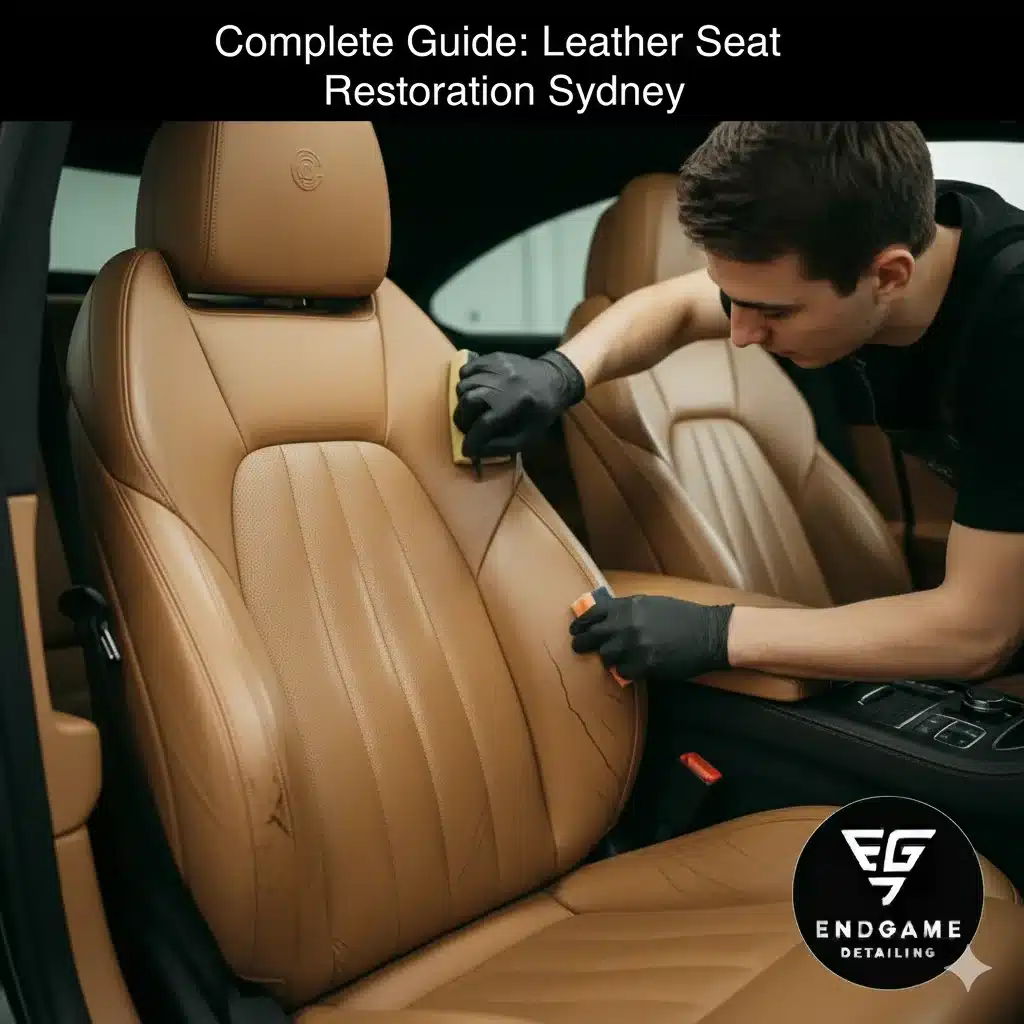
Visible cracks are the most obvious warning sign. Leather cracks when natural oils evaporate, leaving the material brittle and vulnerable. Cracks typically appear first along high-stress areas like seat bolsters, seams, and where you enter and exit the vehicle.
Color fading happens gradually from UV exposure. Driver seats fade most noticeably because they receive direct sunlight through the windscreen. Fading leather looks washed out, dull, and significantly older than the vehicle’s actual age.
Surface stiffness indicates the leather has lost its natural suppleness. Healthy leather feels soft and flexible. Stiff leather has lost essential oils and moisture, making it prone to cracking with continued use.
Discoloration and staining from body oils, sweat, denim transfer, and spills penetrate leather over time. While surface stains respond to cleaning, deep discoloration requires professional color restoration.
Peeling or flaking suggests the leather’s protective topcoat has failed. This usually happens on lower-quality leather or when harsh cleaners have stripped the finish layer.
Tears and punctures obviously require repair. Small tears expand quickly if ignored, eventually requiring expensive reupholstery rather than simple restoration.
Professional assessment determines whether your leather needs restoration or has deteriorated beyond repair. Our interior detailing specialists provide honest evaluation of restoration potential during initial inspection.
Understanding Different Types of Leather Damage
Not all leather damage is the same. Understanding what’s affecting your seats helps you communicate effectively with restoration professionals.
Drying and Cracking
Sydney’s intense UV radiation and heat literally bake the moisture and natural oils from leather. As leather dries, it loses flexibility and develops fine surface cracks that deepen into structural damage over time.
Dried leather feels stiff and papery rather than supple. The surface may show fine lines that expand into obvious cracks with continued use and flexing.
UV Fading and Discoloration
Ultraviolet radiation breaks down leather dyes, causing color to fade or change entirely. Black leather often turns grey or brownish. Tan leather becomes pale and uneven.
Fading rarely affects the entire seat uniformly. Driver seats show the most damage, particularly on the seat cushion and backrest areas receiving direct sunlight.
Wear and Abrasion
Constant friction from entering, exiting, and adjusting seating position gradually wears away leather’s surface. High-wear areas include seat bolsters, steering wheel contact points, and anywhere your body makes repeated contact.
Worn leather appears shiny and thin compared to protected areas. The grain pattern becomes less distinct, and the surface may feel smoother but weaker.
Dye Transfer and Staining
Dark denim transfers blue dye onto light leather. Body oils create dark patches on headrests and seat backs. Food, drinks, and other contaminants cause obvious staining that standard cleaning can’t remove.
Deep stains require specialized treatments to extract the contamination before color restoration can succeed.
Structural Damage
Tears, punctures, and separation along seams represent structural failures requiring physical repair before aesthetic restoration can proceed.
Small tears (under 2cm) usually respond well to professional repair. Larger damage may need leather patching or, in extreme cases, panel replacement.

The Professional Leather Restoration Process
Understanding each phase helps you recognize quality workmanship and realistic timelines.
Thorough Cleaning and Preparation
Restoration begins with deep cleaning using pH-balanced leather cleaners that remove surface contaminants without damaging the material.
Professional car detailing experts use specialized brushes and techniques to clean grain patterns, seams, and perforations without forcing dirt deeper into the leather. This preparation is essential for subsequent steps to bond properly.
Damage Assessment and Repair Planning
Technicians closely examine every surface, identifying all cracks, tears, wear patterns, and color issues. This assessment determines which repairs are possible and the optimal approach for your specific leather type.
Different leather finishes (aniline, semi-aniline, pigmented) require different restoration techniques. Using incorrect methods can worsen damage or create unnatural-looking results.
Physical Repair of Cracks and Tears
Small cracks get filled with specialized leather fillers that flex with the material rather than creating rigid patches that crack again.
Tears require careful preparation, application of bonding agents, and sometimes reinforcement with sub-patches before filling and texturing to match surrounding leather.
For significant damage, professional restoration may involve removing the seat cover, performing repairs from the back side, and carefully reinstalling the leather.
Color Restoration and Matching
Once physical repairs are complete, color restoration addresses fading and discoloration. Professional technicians custom-mix dyes to precisely match your leather’s original color.
Multiple thin coats build up color gradually, allowing for fine adjustments. This layering technique creates natural-looking results that blend seamlessly with undamaged areas.
Color restoration isn’t just painting over damage. It involves penetrating the leather with dyes that become part of the material rather than sitting on the surface.
Conditioning and Moisturizing
Thorough conditioning replaces oils lost through aging, UV exposure, and daily use. Quality conditioners penetrate deep into leather, restoring suppleness and flexibility.
This step is crucial for preventing future cracking. Well-conditioned leather resists moisture loss and remains flexible even under stress.
Protective Sealing
The final step applies a protective topcoat that guards against UV damage, staining, and wear. This barrier helps your restoration last for years while making future cleaning easier.
The protective layer should be flexible enough to move with the leather without cracking or peeling. Premium products used by Sydney’s premium detailing specialists provide long-lasting protection without altering the leather’s natural appearance or feel.
Leather Restoration vs. Complete Reupholstery
Understanding when each option makes sense saves money and achieves better results.
| Factor | Professional Restoration | Complete Reupholstery |
|---|---|---|
| Cost | $400-$1,200 typical | $2,000-$8,000+ |
| Timeline | 4-8 hours | 2-4 weeks |
| Original Match | Maintains factory leather | Aftermarket leather may differ |
| Suitable When | Damage is moderate, leather quality good | Extensive damage, structural failure |
| Value Impact | Preserves originality for resale | Can decrease value if not factory-matched |
| Longevity | 5-10 years with care | 10-20 years |
Restoration makes sense when your leather’s underlying structure remains sound despite surface damage. If you can pinch the leather and it still has some flexibility, restoration will likely succeed.
Reupholstery becomes necessary when leather has completely deteriorated, large sections are beyond repair, or the foam underneath has also failed.
For luxury and classic vehicles, maintaining original leather through restoration often preserves more value than replacing it with aftermarket materials. Our luxury car detailing services emphasize preservation of original components whenever possible.
Cost Factors for Leather Seat Restoration in Sydney
Several variables influence your total investment in professional leather restoration.
Extent of damage is the primary cost driver. Minor color fading requires less work than extensive cracking, tears, and structural repairs. Technicians charge based on time and materials needed, so more damage means higher costs.
Number of seats requiring attention directly affects pricing. Restoring just a driver’s seat costs significantly less than addressing the entire interior. Many Sydney car owners start with the most visible areas and expand restoration as budget allows.
Leather type and quality influences both difficulty and materials cost. Exotic leathers like Nappa require specialized products. Perforated leather takes longer to clean and treat. Aniline leather (minimal surface coating) demands gentler techniques than heavily pigmented leather.
Color matching complexity varies. Solid black or tan restorations are straightforward. Two-tone interiors, custom colors, or aged patina matching require more skill and time to achieve natural-looking results.
Additional services like protective coating application, headliner work, or complementary interior treatments affect total cost. Many clients combine leather restoration with comprehensive interior detailing for best overall results.
For detailed pricing across all detailing services, our car detailing cost guide provides transparent information to help you budget appropriately.
DIY Leather Restoration: Why Professional Service Delivers Better Results
Retail leather repair kits promise easy fixes, but several factors make professional restoration superior.
Product quality differs dramatically. Consumer products use generic formulations. Professional-grade materials are specifically engineered for automotive leather and deliver far superior durability and appearance.
Color matching requires experience and specialized equipment. Off-the-shelf dyes rarely match perfectly, creating obvious patches rather than seamless restoration. Professionals custom-mix colors to exact specifications.
Technique and experience matter enormously. Improper application leaves visible brush marks, uneven color, or rigid repairs that crack immediately. Experienced technicians know how much product to apply, proper drying times, and finishing techniques that create factory-like results.
Specialized tools for leather prep, application, and texturing aren’t economical for one-time use. Professionals invest in equipment that enables precision work impossible with household tools.
Risk of making damage worse is significant with DIY attempts. Wrong products can seal in dirt, incorrect repairs can make leather stiffer and more prone to cracking, and poor color matching can require expensive correction.
The cost difference between DIY attempts and professional service is smaller than most people assume, especially when factoring in materials, tools, and time. Professional restoration typically costs $400 to $600 for front seats, while quality DIY supplies run $150 to $250 with uncertain results.
Maintaining Restored Leather: Protecting Your Investment
Proper maintenance extends your restoration’s lifespan significantly.
Regular conditioning every 3 to 6 months replenishes oils and maintains suppleness. Use products specifically designed for automotive leather, not furniture treatments that can leave greasy residues.
Gentle cleaning addresses dirt and stains before they penetrate. Wipe seats weekly with a microfiber cloth. Address spills immediately with proper leather cleaner rather than household products.
UV protection is critical in Sydney’s intense sun. Park in shade when possible. Use windscreen sun shades. Consider window tinting to reduce UV penetration. Some professional restoration includes UV-blocking topcoats for additional protection.
Avoid harsh chemicals including household cleaners, alcohol-based products, and aggressive detergents. These strip protective coatings and natural oils, accelerating deterioration.
Temperature management helps prevent leather drying. Crack windows slightly when parked in heat. Use seat covers if your vehicle sits outdoors long-term, though quality restoration should withstand normal exposure.
Professional maintenance programs provide scheduled conditioning and inspection, catching minor issues before they require expensive repairs. This proactive approach maximizes restoration longevity.