Understanding the Basics: What Are Vinyl Wraps and PPF?
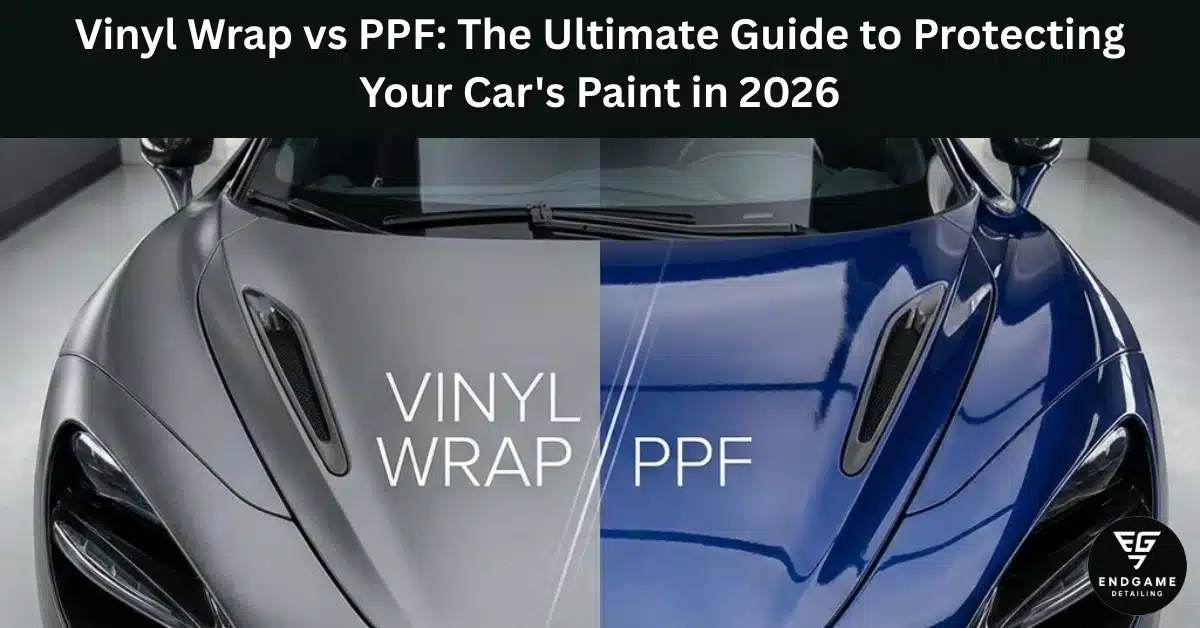
When you’re investing in your vehicle’s appearance and protection, the vinyl wrap vs PPF debate becomes crucial. Let’s break down what each option actually offers.
What is Vinyl Wrap?
Vinyl wrap is a thin, adhesive film applied to your car’s exterior to change its color or finish. Think of it as a removable skin for your vehicle.
Key characteristics include:
- Available in thousands of colors and finishes (matte, gloss, satin, chrome, carbon fiber)
- Thickness: 3-4 mils (approximately 0.003-0.004 inches)
- Primary purpose: Aesthetic transformation
- Secondary benefit: Light protection against minor scratches and UV rays
What is Paint Protection Film (PPF)?
PPF is a clear, thick urethane film specifically engineered to protect your car’s paint from damage. It’s the armor your paint needs.
Key characteristics include:
- Clear finish that maintains your car’s original color
- Thickness: 6-8 mils (approximately 0.006-0.008 inches)
- Primary purpose: Maximum paint protection
- Special feature: Self-healing properties that repair minor scratches with heat
“I switched from vinyl to PPF on my GT-R after rock chips destroyed my wrapped bumper. The self-healing technology is absolutely worth the investment. Three years later, my paint still looks factory fresh.” — Marcus Chen, Sydney JDM Enthusiast
The Real Difference: Protection Level Comparison
Understanding the vinyl wrap vs PPF protection capabilities helps you choose what your car actually needs.
Vinyl Wrap Protection Capabilities
Protection Level: Moderate
- UV Protection: Good (prevents paint fading)
- Scratch Resistance: Fair to moderate (protects against light scratches)
- Rock Chip Protection: Minimal (thin material punctures easily)
- Self-Healing: None (scratches are permanent)
- Chemical Resistance: Moderate (requires careful cleaning)
PPF Protection Capabilities
Protection Level: Excellent
- UV Protection: Excellent (superior UV inhibitors)
- Scratch Resistance: Very high (much thicker material)
- Rock Chip Protection: Excellent (absorbs impact energy)
- Self-Healing: Yes (heat activates healing polymers)
- Chemical Resistance: Excellent (resists most automotive chemicals)
| Protection Factor | Vinyl Wrap | PPF |
|---|---|---|
| Thickness | 3-4 mils | 6-8 mils |
| Self-Healing | ✗ | ✓ |
| Rock Chip Resistance | Low | High |
| Scratch Protection | Moderate | Excellent |
| UV Protection | Good | Excellent |
| Lifespan | 3-7 years | 5-10 years |
For vehicles requiring serious protection, professional detailers recommend combining paint correction services before applying either option to ensure optimal adhesion and appearance.
Cost Analysis: Breaking Down the Investment
The vinyl wrap vs PPF cost comparison isn’t straightforward because several factors influence the final price.
Vinyl Wrap Costs
Full Vehicle Wrap: $2,000 – $6,000
Factors affecting cost:
- Vehicle size: Larger vehicles require more material
- Complexity: Curves, body lines, and trim increase labor time
- Finish type: Chrome and specialty finishes cost significantly more
- Quality: Premium brands like 3M and Avery Dennison cost more but last longer
Partial wraps (hood, roof, mirrors): $500 – $1,500
PPF Costs
Full Vehicle PPF: $5,000 – $8,000+
Factors affecting cost:
- Coverage area: Full body vs. high-impact zones
- Film quality: Premium brands offer better clarity and self-healing
- Installation complexity: Intricate designs require expert installation
- Vehicle value: Luxury vehicles often use higher-grade films
Partial PPF packages:
- Front-end PPF (hood, bumper, fenders, mirrors): $1,500 – $3,000
- Full car PPF: $5,000 – $8,000+
Understanding PPF cost factors in Sydney helps you budget appropriately and avoid surprises.
Long-Term Value Calculation
When comparing vinyl wrap vs PPF, consider the cost per year:
Vinyl Wrap: $2,000-$6,000 ÷ 5 years average = $400-$1,200/year
PPF: $5,000-$8,000 ÷ 7 years average = $714-$1,143/year
While PPF has a higher upfront cost, its longer lifespan and superior protection often provide better value, especially for vehicles you plan to keep long-term or maintain high resale value.
Durability and Lifespan: Which Lasts Longer?
The vinyl wrap vs PPF durability comparison reveals significant differences in longevity and performance over time.
Vinyl Wrap Lifespan
Average Duration: 3-7 years
Factors affecting longevity:
- Outdoor parking: Reduces lifespan by 1-2 years
- Climate: Extreme heat or cold accelerates degradation
- Maintenance quality: Poor care shortens life significantly
- Film quality: Premium brands last 2-3 years longer than budget options
Common aging issues:
- Fading and discoloration (especially dark colors)
- Edge lifting and peeling
- Adhesive failure in high-stress areas
- Cracking on curved surfaces
PPF Lifespan
Average Duration: 5-10 years
Factors affecting longevity:
- Installation quality: Professional installation extends life
- Vehicle usage: Daily drivers show wear faster than weekend cars
- Maintenance: Regular care maximizes lifespan
- Film generation: Newer PPF technology lasts longer
Aging characteristics:
- Yellowing (older films, resolved in modern premium films)
- Edge contamination
- Self-healing diminishes over time
- Adhesive breakdown after 8-10 years
The superior durability of PPF makes it ideal for new car paint protection, especially when you want to preserve factory paint for the vehicle’s entire lifespan.
Maintenance Requirements: What You Need to Know
Proper maintenance dramatically affects how well vinyl wrap vs PPF performs over time.
Vinyl Wrap Maintenance
Wash every 1-2 weeks to prevent contamination buildup.
Do’s:
- Use pH-neutral car soap
- Hand wash with microfiber wash mitts
- Dry immediately with microfiber towels
- Park in shade when possible
Don’ts:
- Never use automatic car washes (brushes damage vinyl)
- Avoid pressure washers on edges
- Don’t use wax or abrasive compounds
- Skip harsh degreasers or solvents
Special care:
- Edges require extra attention (prone to lifting)
- Matte finishes need specific matte detailers
- Reapply vinyl-safe sealant every 3-4 months
For comprehensive cleaning, consider professional car steam cleaning which safely cleans vinyl without harsh chemicals.
PPF Maintenance
Wash every 2 weeks to maintain clarity and self-healing properties.
Do’s:
- Use PPF-safe car soap
- Hand wash or touchless car wash
- Apply PPF-specific sealants quarterly
- Use ceramic coating boosters for enhanced gloss
Don’ts:
- Avoid contaminated wash mitts (can scratch)
- Don’t use petroleum-based products
- Skip automatic brushes initially (wait 30 days)
- Avoid excessive heat during first week
Self-healing activation:
- Park in sun or use heat gun for minor scratches
- Works best at temperatures above 140°F (60°C)
- Deep scratches may not fully heal
Many professionals recommend adding graphene coating over PPF to enhance gloss, hydrophobic properties, and ease of maintenance.
Aesthetic Options: Customization Possibilities
The vinyl wrap vs PPF aesthetic comparison shows dramatically different capabilities.
Vinyl Wrap Customization
Endless possibilities make vinyl wraps the champion of customization.
Color options:
- Solid colors (thousands available)
- Color-shifting/flip colors
- Metallic and pearl finishes
- Matte, satin, or gloss finishes
- Chrome and mirror finishes
- Brushed metal effects
Pattern options:
- Carbon fiber textures
- Camouflage patterns
- Custom graphics and designs
- Racing stripes and accents
- Full vehicle wraps with branding
Perfect for:
- Show cars requiring unique looks
- Business vehicles needing branding
- Car enthusiasts wanting seasonal changes
- Temporary color changes before selling
Check out inspiring examples in the gallery showcasing various wrap transformations.
PPF Aesthetic Options
Limited but improving customization options.
Traditional PPF:
- Clear/transparent only
- Maintains original paint color
- Glossy finish (enhances depth)
- Barely visible when properly installed
Modern PPF options:
- Matte PPF (maintains factory matte finishes)
- Color-changing PPF (combines protection with new colors)
- Tinted PPF (subtle color enhancement)
- Textured PPF (carbon fiber appearance with protection)
Best for:
- Preserving factory paint
- Maintaining resale value
- Protecting limited edition colors
- Professional/conservative aesthetics
Installation Process: Complexity and Time Required
Understanding the installation differences in vinyl wrap vs PPF helps set realistic expectations.
Vinyl Wrap Installation
Time Required: 2-5 days for full vehicle
Process overview:
- Surface preparation (cleaning, decontamination, degreasing)
- Panel disassembly (removing trim, badges, handles)
- Film application (stretching, positioning, heat-forming)
- Edge tucking (securing film under panels)
- Trimming and finishing (cutting excess, sealing edges)
- Reassembly (reinstalling removed components)
Installation challenges:
- Requires significant stretching and heat-forming
- Mistakes are harder to correct
- Curves and body lines demand expertise
- Color matching across panels needs skill
DIY feasibility: Possible but not recommended (high error rate, expensive materials)
PPF Installation
Time Required: 3-7 days for full vehicle
Process overview:
- Paint correction (removing swirl marks and scratches)
- Precision measurement (custom templates or computer cutting)
- Surface preparation (ultra-clean environment required)
- Application solution (slip solution for positioning)
- Film placement (precise alignment critical)
- Squeegee work (removing air and solution)
- Edge sealing (preventing contamination)
- Curing period (24-48 hours before exposure)
Installation challenges:
- Requires cleaner environment than vinyl
- Precision cutting essential (visible edges if misaligned)
- Paint correction mandatory for best results
- More technical skill required
DIY feasibility: Not recommended (requires professional tools, experience, and environment)
For optimal results with either option, professional paint restoration and sometimes wet sanding are recommended before installation.
Which Option Suits Your Vehicle Type?
The vinyl wrap vs PPF decision depends heavily on your vehicle type and usage.
Best for JDM Sports Cars (GT-R, Supra, RX-7, NSX)
Recommendation: PPF + Strategic Vinyl Accents
Why PPF works:
- High-performance driving creates more paint threats
- Preserves collector value
- Protects against track debris
- Self-healing handles daily wear
Why vinyl works:
- Creates unique aesthetics for shows
- Easy to change for events
- Affordable customization
- Highlights body lines with contrasting colors
Ideal solution: PPF on high-impact areas (front end, rocker panels) with vinyl accents on roof, mirrors, or stripes.
Best for Luxury Vehicles (Mercedes, BMW, Porsche, Audi)
Recommendation: Full PPF Coverage
Reasoning:
- Maintains premium factory paint
- Protects significant paint investment
- Preserves resale value (critical for luxury market)
- Professional appearance requirement
- Higher car detailing costs justify better protection
Consider luxury car detailing services that specialize in high-end vehicle protection.
Best for Classic Cars
Recommendation: Clear PPF
Reasoning:
- Original paint irreplaceable
- Paint correction difficult on older finishes
- Protects historical value
- Maintains authentic appearance
- Reduces need for future restoration
Best for New Car Owners
Recommendation: PPF Within First 6 Months
Reasoning:
- Factory paint in perfect condition
- Maximum protection from day one
- No paint correction needed
- Full warranty period coverage
- Best ROI on resale
Best for Business Vehicles
Recommendation: Vinyl Wrap
Reasoning:
- Branding requirements
- Frequent design updates
- Cost-effective advertising
- Easy removal when selling
- Tax deductibility as business expense
Best for Daily Drivers on Budget
Recommendation: Front-End PPF
Reasoning:
- Protects highest-risk areas
- Affordable compromise
- Significant value for money
- Easier to expand coverage later
Protection priority zones:
- Front bumper (maximum rock chip exposure)
- Hood (second highest impact zone)
- Fenders (wheel spray damage)
- Side mirrors (road debris)
PPF vs Vinyl Wrap vs Ceramic Coating: The Complete Comparison
Many car owners wonder about PPF vs ceramic coating and how vinyl fits into the equation.
Protection Hierarchy
Best to Least Protection:
- PPF (physical barrier, maximum protection)
- Vinyl Wrap (moderate physical protection)
- Ceramic Coating (chemical protection, no physical barrier)
Combining Protection Methods
The ultimate protection stack:
- Paint Correction (perfect surface preparation)
- PPF Installation (physical protection layer)
- Ceramic Coating (applied over PPF for enhanced properties)
This combination offers:
- Maximum scratch and chip resistance (PPF)
- Enhanced gloss and depth (ceramic coating)
- Easier cleaning (hydrophobic ceramic layer)
- Extended PPF lifespan (ceramic protection)
When to Choose Each
Choose PPF when:
- Protection is the primary goal
- Vehicle sees highway driving
- Resale value is important
- Budget allows for best protection
Choose Vinyl Wrap when:
- Aesthetics are the priority
- You want color flexibility
- Budget is moderate
- Protection needs are secondary
Choose Ceramic Coating when:
- Paint is already excellent
- You want gloss enhancement
- Easy maintenance is important
- Budget is limited
Choose Combination when:
- You want absolute best protection
- Vehicle is high-value
- Long-term ownership planned
- Budget allows premium protection

Common Mistakes to Avoid
Learning from others’ errors in the vinyl wrap vs PPF decision saves money and frustration.
Vinyl Wrap Mistakes
1. Choosing Price Over Quality
- Cheap vinyl fails within 1-2 years
- Poor adhesive damages paint on removal
- Color inconsistency across panels
- Solution: Invest in 3M, Avery Dennison, or KPMF brands
2. Skipping Paint Preparation
- Contaminants cause bubbles and poor adhesion
- Existing damage shows through vinyl
- Premature failure likely
- Solution: Professional decontamination and correction first
3. DIY Installation Without Experience
- Stretched vinyl creates weak points
- Improper heat application causes failure
- Edge lifting from poor tucking technique
- Solution: Hire experienced professionals
4. Neglecting Edge Maintenance
- Lifted edges allow water infiltration
- Dirt accumulation ruins appearance
- Accelerates complete wrap failure
- Solution: Regular edge inspection and resealing
5. Using Automatic Car Washes
- Brushes catch and lift vinyl edges
- High pressure penetrates seams
- Premature wrap failure guaranteed
- Solution: Hand wash only
PPF Mistakes
1. Skipping Paint Correction
- Imperfections magnified under clear film
- Swirl marks permanently visible
- Professional appearance impossible
- Solution: Always correct paint first
2. Choosing Cheap PPF
- Yellowing within 2-3 years
- Poor self-healing capability
- Difficult removal
- Solution: Use premium brands (XPEL, 3M, SunTek)
3. Incomplete Coverage
- Unprotected areas develop damage
- Obvious color difference at film edges
- Partial protection defeats purpose
- Solution: Plan comprehensive coverage or strategic high-impact zones
4. Ignoring Cure Time
- Washing too early causes failure
- Water trapped under film
- Adhesive doesn’t bond properly
- Solution: Wait full 7 days before first wash
5. No Top Coating
- Harder to maintain
- Less gloss and shine
- More effort required for cleaning
- Solution: Add ceramic coating or PPF sealant
Removal Process: What Happens When It’s Time?
Understanding removal in vinyl wrap vs PPF helps with long-term planning.
Vinyl Wrap Removal
Process difficulty: Moderate to Easy
Time required: 4-8 hours for full vehicle
Steps:
- Heat application (loosens adhesive)
- Corner peeling (start points)
- Slow, consistent pulling (45-degree angle)
- Adhesive removal (if residue remains)
- Paint polishing (restore finish)
Potential issues:
- Adhesive residue (especially on aged wraps)
- Paint damage (if wrap left too long)
- Difficult removal on complex curves
- Clear coat damage (rare with quality vinyl)
Cost: $500-$1,500 professional removal
PPF Removal
Process difficulty: Moderate
Time required: 6-10 hours for full vehicle
Steps:
- Heat application (softens adhesive)
- Edge lifting (careful starting)
- Slow peeling (prevents paint damage)
- Adhesive cleanup (specialized removers)
- Paint inspection (verify no damage)
- Polish (optional, restore factory gloss)
Potential issues:
- Adhesive ghosting (visible outline)
- Edge staining (contamination over years)
- Paint oxidation underneath (extreme age)
- Clear coat lifting (improper removal technique)
Cost: $800-$2,000 professional removal
Important note: Never remove either product if paint is damaged or compromised underneath. This can cause clear coat failure.
Real-World Scenarios: Success Stories and Lessons
Actual experiences illustrate the vinyl wrap vs PPF decision in practice.
Scenario 1: Sydney JDM Enthusiast
Vehicle: 2022 Nissan GT-R
Choice: Full front-end PPF + Carbon fiber vinyl roof
Reasoning:
- Daily driver with regular spirited driving
- Highway commute creates rock chip risk
- Wanted some customization without compromising protection
Result after 2 years:
- Zero paint damage despite 40,000km
- Multiple rock chips absorbed by PPF
- Vinyl roof still perfect (garaged storage helps)
- Self-healing worked on 90% of minor scratches
Investment: $3,200 (PPF) + $800 (vinyl) = $4,000
Value: Avoided $2,000+ in paint repairs, maintained resale value
Scenario 2: Luxury Car Owner
Vehicle: 2023 Porsche 911
Choice: Full PPF with ceramic coating
Reasoning:
- $200,000+ vehicle requiring maximum protection
- Maintains factory paint for collector value
- Regular car show attendance
Result after 18 months:
- Paint remains flawless
- Easy maintenance (ceramic coating benefit)
- Self-healing amazing for parking lot scratches
- Professional appearance maintained
Investment: $7,500
Value: Paint remains perfect, estimated $15,000+ value retention on resale
Scenario 3: Business Fleet Vehicle
Vehicle: Ford Transit van
Choice: Full vinyl wrap with company branding
Reasoning:
- Mobile advertising priority
- Moderate protection needs
- Rebrand possible in 3-5 years
- Tax deductible business expense
Result after 3 years:
- Effective moving billboard
- Easy to clean and maintain
- Minor scratches and dings hidden
- Original paint protected for resale
Investment: $3,500
Value: Advertising exposure estimated at $50,000+, protection secondary benefit
Regional Considerations: Sydney-Specific Factors
Location affects the vinyl wrap vs PPF decision significantly.
Sydney Climate Impact
Sun exposure: Intense Australian UV rays accelerate both vinyl and PPF degradation
Recommendations:
- Choose premium UV-resistant films
- Garage parking when possible
- Regular sealant application
- Consider lighter colors (less heat absorption)
Sydney Road Conditions
Road quality: Variable conditions create protection needs
High-risk areas:
- M4 motorway (high-speed debris)
- Northern Beaches roads (salt air exposure)
- Parramatta Road (heavy traffic, debris)
- City parking (tight spaces, door dings)
Protection strategy:
- Minimum front-end PPF for highway drivers
- Full PPF for luxury vehicles
- Regular inspection and maintenance
Local Service Availability
Sydney offers excellent detailing services across multiple locations:
- Car detailing in Parramatta
- Car detailing in Guildford
- Car detailing in Strathfield
- Car detailing in Burwood
- Car detailing in Concord
- Car detailing in Croydon
Professional services ensure proper installation and maintenance regardless of location.