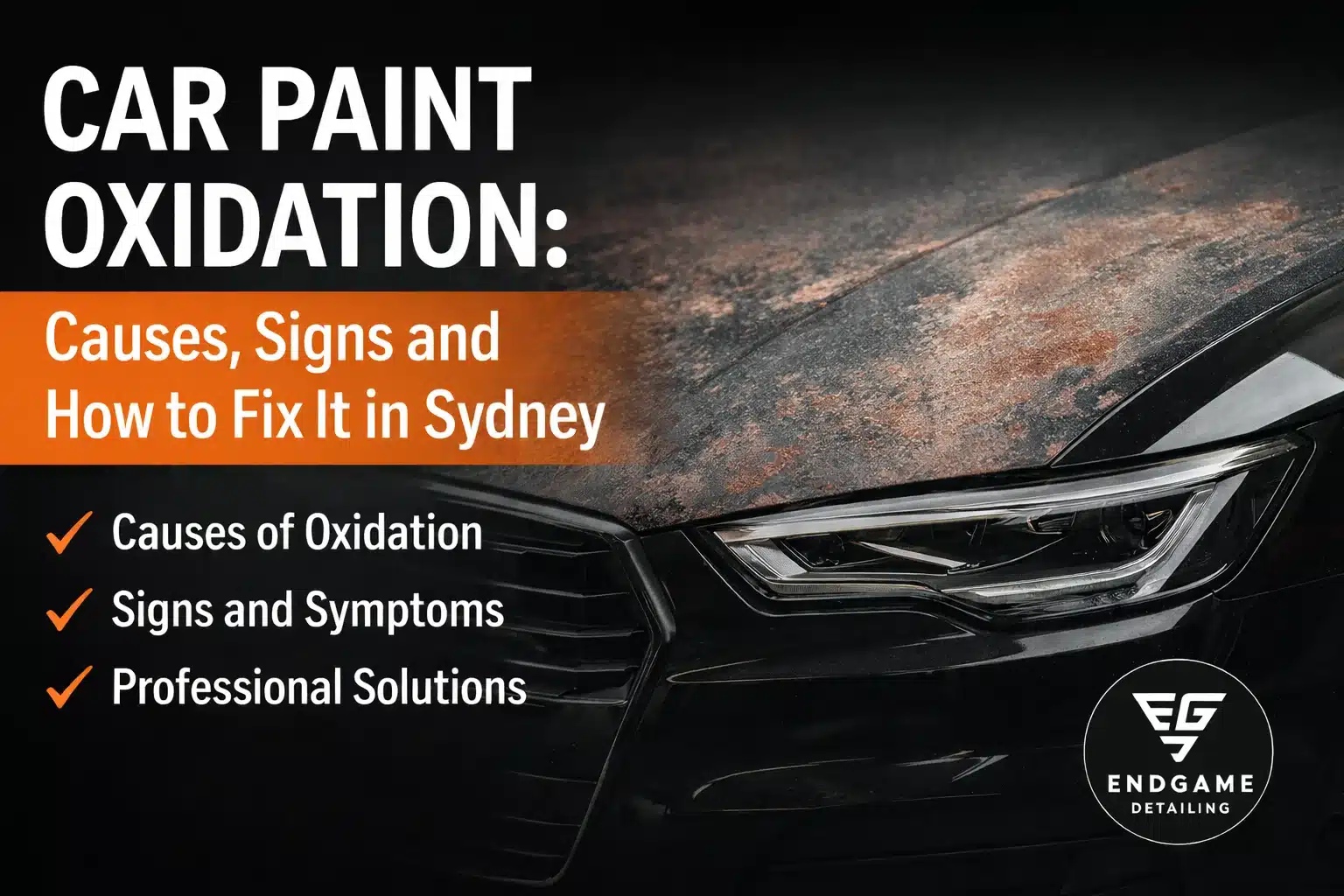
Car Paint Oxidation: What It Is, What Causes It, and How to Fix It in Sydney
Car paint oxidation is not just about a car looking a bit tired. It is a genuine chemical breakdown happening at the surface of your paintwork, and once it takes hold, it only accelerates.
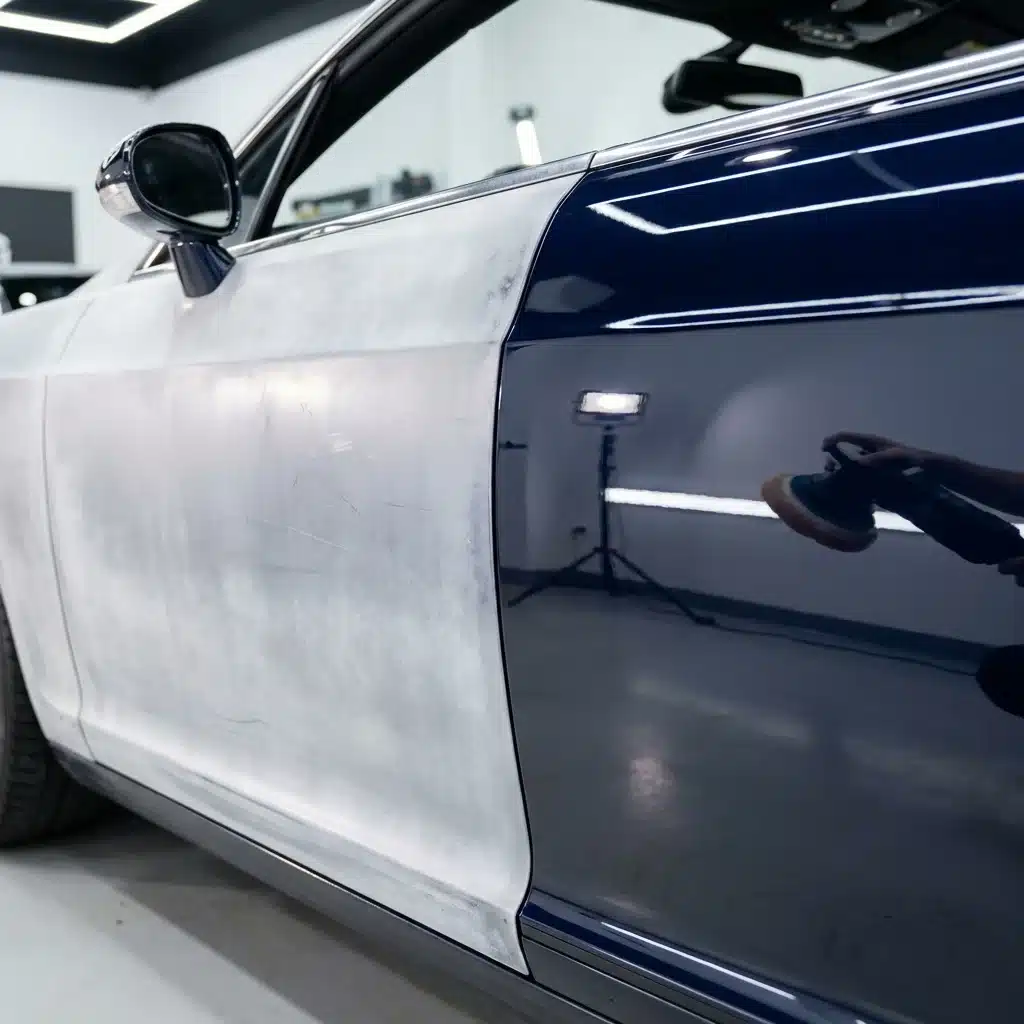
If you have ever looked at an older car and noticed the paint looks chalky, faded, or like the colour has been washed out, that is oxidation doing its work. The good news is that in most cases it is fixable. The bad news is that waiting too long makes the fix significantly more involved.
This guide explains exactly what oxidation is, why Sydney’s environment makes it worse than most, how to spot it early, and what the correction process looks like.
What is Car Paint Oxidation?
Car paint oxidation is a chemical reaction between your paint’s clear coat and oxygen, UV radiation, and environmental contaminants. Over time, this reaction breaks down the molecular structure of the clear coat layer, causing it to become rough, porous, and increasingly unable to reflect light properly.
Your car’s paint is not just one layer. It sits in a system:
- Primer: bonded directly to the bare metal
- Base coat: the colour you see
- Clear coat: the transparent protective layer that sits on top and provides gloss
Oxidation attacks the clear coat first. As the clear coat degrades, UV rays then begin damaging the base coat underneath, causing the colour to fade and lose depth.
“Most people think their car just needs a wash. But when paint looks chalky or dull, no amount of washing will fix it. That chalky layer is oxidised clear coat, and it needs to be properly corrected to restore the finish.” Senior detailer, Sydney car care specialist
Why Does Car Paint Oxidise?
The four main causes of car paint oxidation are UV radiation, moisture, airborne contaminants, and lack of protection.
Here is a breakdown of each:
| Cause | How It Damages Paint |
|---|---|
| UV radiation | Breaks down the molecular bonds in the clear coat, causing it to become brittle and chalky |
| Moisture and humidity | Penetrates micro-cracks in the clear coat and accelerates chemical breakdown |
| Airborne contaminants | Salt, industrial fallout, bird droppings, and tree sap etch into the clear coat |
| Lack of protective coating | Unprotected clear coat has no barrier against any of the above |
Sydney adds an extra layer of risk. The city sits at a latitude that delivers some of the highest UV index readings in the world. Coastal suburbs from Bondi to Manly to Palm Beach are exposed to salt-laden air year-round. Cars parked outdoors in Sydney without protection are exposed to a combination of conditions that accelerates oxidation faster than most Australian cities.
How to Identify Car Paint Oxidation Early
The earlier you catch oxidation, the easier and less expensive it is to correct. Here are the stages and what to look for at each one.
Stage 1 – Light Oxidation
- Paint looks slightly dull or hazy rather than sharp and glossy
- Colour appears a shade or two lighter than it should
- Running your hand over the panel produces a fine chalky residue on your fingertips
- Gloss returns temporarily after wetting the panel but disappears as it dries
What it means: The clear coat surface is beginning to degrade. This stage is very correctable with a single or two-stage machine polish.
Stage 2 – Moderate Oxidation
- Paint looks clearly faded and lacks any deep gloss
- Chalky, powdery deposits visible without touching the panel
- Swirl marks and fine scratches are amplified because the clear coat has thinned
- Colour may appear patchy or uneven across panels
What it means: The clear coat has degraded further. Machine polishing alone may not be sufficient. Multi-stage paint correction is usually required.
Stage 3 – Heavy Oxidation
- Paint looks flat, chalky, and significantly discoloured
- The surface feels rough to the touch
- Colour depth is severely compromised, particularly on darker colours
- Cracking or flaking of the clear coat may be visible in the worst-affected areas
What it means: The clear coat is in serious deterioration. Wet sanding followed by machine polishing is typically required. In extreme cases, repainting panels may be the only option if the clear coat has been fully consumed.
Car Paint Oxidation by Colour: Which Cars Are Most Affected?
Not all paint colours oxidise at the same rate or in the same way. Understanding how your car’s colour behaves helps you manage it correctly.
| Paint Colour | Oxidation Risk | How It Appears |
|---|---|---|
| Black | Very high | Swirls, fading, and chalky haze are brutally visible |
| Dark blue / dark grey | High | Loses depth quickly, colour appears washed out |
| Red | High | Fades to a pink or copper tone as the base coat degrades |
| White | Moderate | Develops a yellowed or chalky appearance |
| Silver / light grey | Lower visual impact | Oxidation is less obvious but still present |
Dark colours and reds are the most unforgiving. A black car with even stage 1 oxidation will look flat and tired. A red car left unprotected in Sydney’s sun will begin fading noticeably within two to three years without any protective coating.
Can Car Paint Oxidation Be Fixed?
Yes. In most cases, car paint oxidation can be fully corrected by a professional detailing team. The method depends on the severity.
Light to Moderate Oxidation: Machine Polishing and Paint Correction
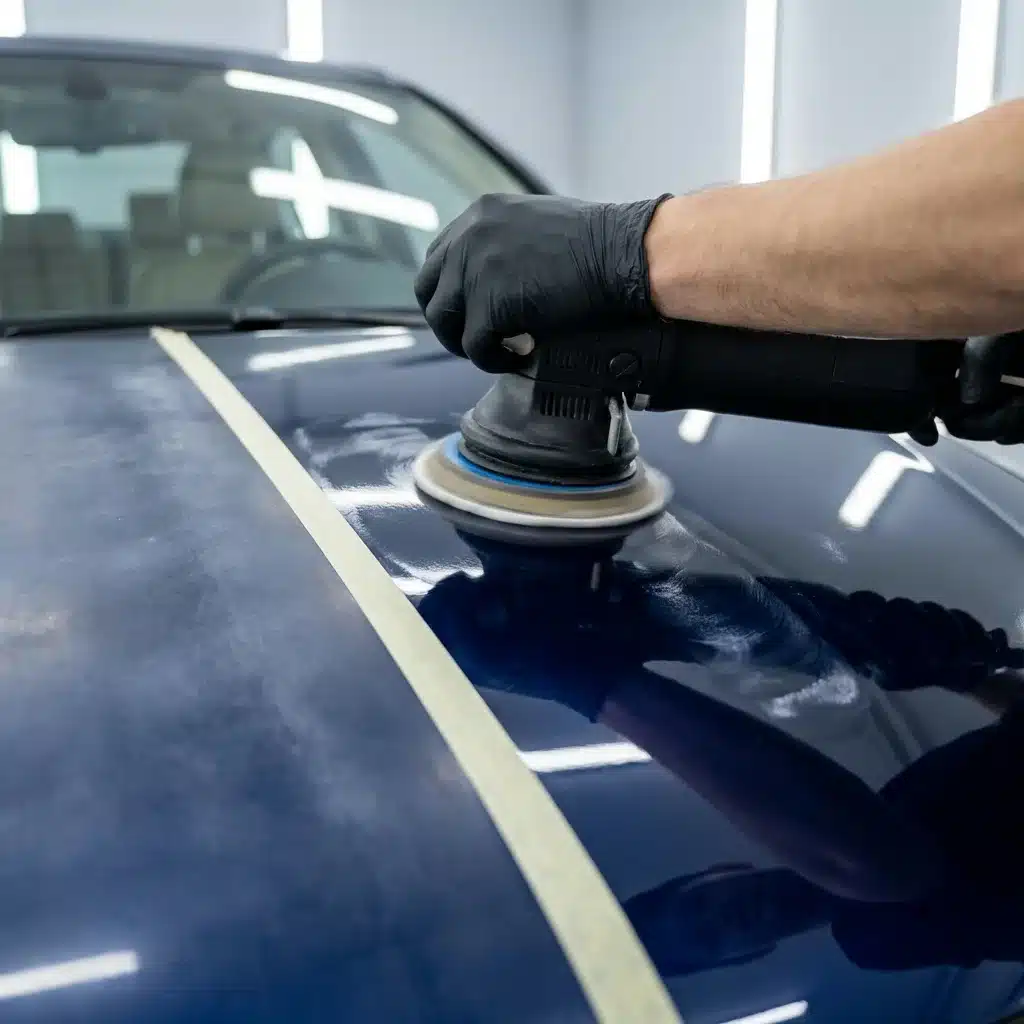
For stage 1 and early stage 2 oxidation, professional machine polishing removes the degraded surface layer of the clear coat and exposes the healthier material underneath.
This is the most common approach and produces dramatic results. A professional paint correction service uses a combination of cutting compounds, finishing polishes, and machine polishers to work through the defects systematically.
The process:
- Full decontamination wash to remove surface contamination
- Clay bar treatment to remove bonded contaminants
- Panel inspection under LED lighting to assess oxidation depth
- Machine polishing using appropriate compound and pad combination
- Finishing polish to restore deep gloss and clarity
- Protection applied to seal the corrected surface
Heavy Oxidation: Wet Sanding
Where machine polishing alone cannot fully address the oxidation because the clear coat is too degraded or uneven, wet sanding is used first to level the surface before polishing.
Wet sanding uses ultra-fine abrasive paper with water lubrication to remove a controlled, minimal layer of clear coat. It requires significant experience because removing too much clear coat cannot be undone. Carried out correctly by a skilled detailer, it produces a glass-like foundation that polishing then brings to a mirror finish.
For a full breakdown of what professional restoration involves, the car paint restoration service covers everything from light correction through to multi-stage restoration for heavily damaged paint.
What Does Oxidation Correction Actually Cost in Sydney?
The cost of correcting car paint oxidation in Sydney depends on the severity of the damage, the size of the vehicle, and whether full correction or partial work is needed.
Here is a general guide:
| Oxidation Severity | Likely Approach | Typical Sydney Cost Range |
|---|---|---|
| Light (stage 1) | Single-stage machine polish | Quoted after inspection |
| Moderate (stage 2) | Multi-stage paint correction | Quoted after inspection |
| Heavy (stage 3) | Wet sanding and full correction | Quoted after inspection |
| Extreme (clear coat failure) | Partial or full respray | Panel shop quote after inspection |
For accurate pricing based on your specific vehicle and condition, see the Sydney car detailing cost guide, or book a free inspection so we can assess your paint in person.
How to Prevent Car Paint Oxidation
Prevention is dramatically cheaper and less disruptive than correction. The best time to protect your paint is before oxidation begins.
These are the most effective options, from least to most durable:
Regular maintenance washing: Washing your car every two weeks with a pH-neutral shampoo removes the salt, bird droppings, and contaminants that contribute to oxidation. This is the baseline, not a substitute for a proper protective coating.
Ceramic coating: A ceramic coating bonds to your clear coat and creates a hard, hydrophobic layer that reflects UV rays, repels contaminants, and significantly slows the oxidation process. A professionally applied ceramic coating typically lasts two to five years and makes the car dramatically easier to maintain. For further reading on keeping your coating performing, see the guide on how to maintain ceramic coating.
Graphene coating: A graphene coating takes ceramic protection further with a slicker, harder surface and strong chemical resistance. For cars exposed to Sydney’s intense UV environment, graphene is worth considering for the additional durability it provides.
Paint protection film (PPF): PPF is the most physically robust protection available. It shields the paint from UV, chips, scratches, and chemical contamination under a self-healing urethane layer. We install full car PPF in gloss or matte, covering every painted panel that protects every panel. For a comparison of the two main protection approaches, the PPF vs ceramic coating guide covers the trade-offs clearly.