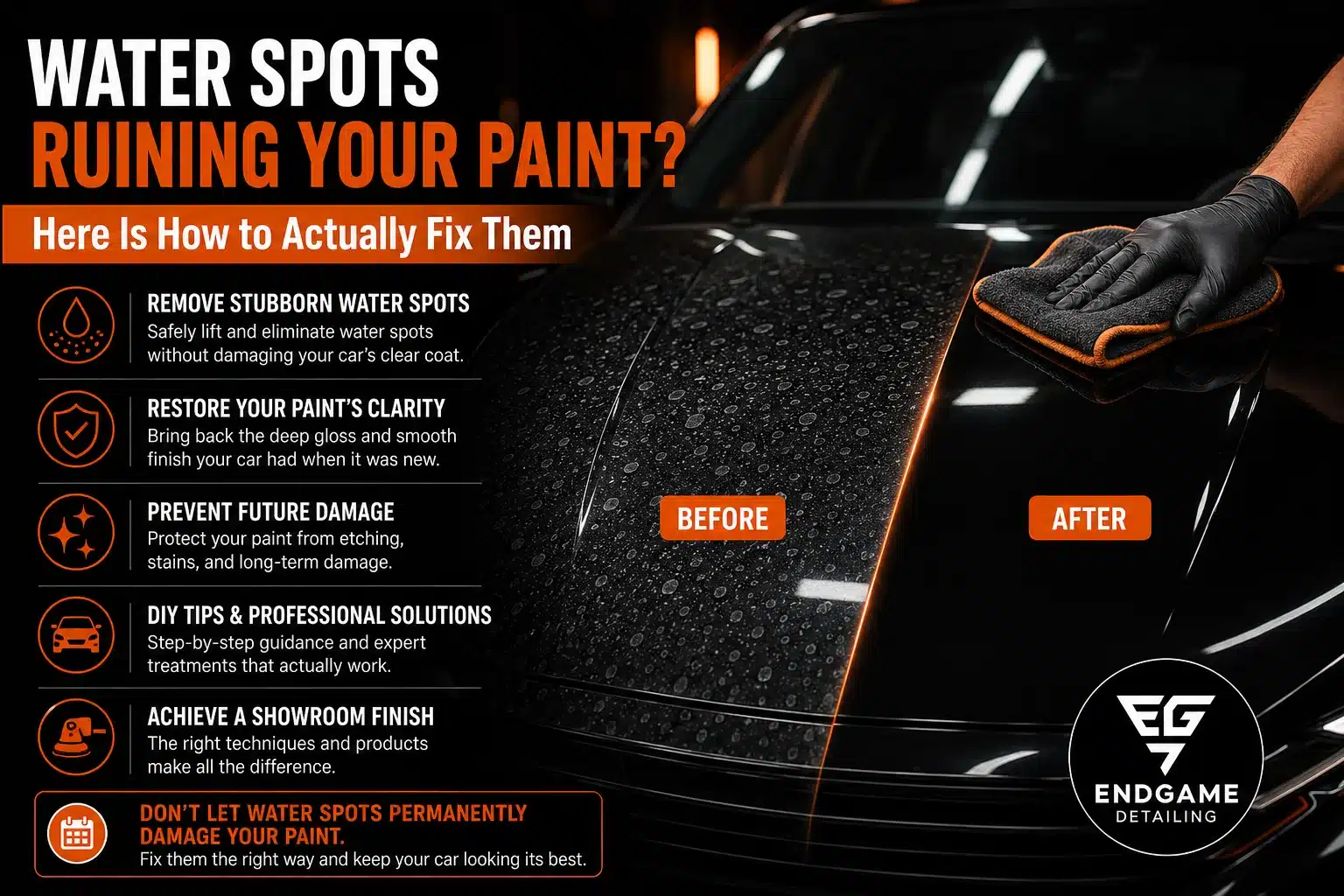
What Causes Water Spots on Cars?
Water spots are not just “dried water.” They are mineral deposits left behind after water evaporates from your car’s surface.
Sydney’s water supply contains dissolved minerals like calcium, magnesium, and silica. When that water sits on your paint and dries in the sun, the liquid evaporates but the minerals stay behind, bonded to the surface.
The most common causes include:
- Sprinkler systems hitting your car while parked in the driveway
- Bore water or tank water used for washing (extremely high mineral content)
- Rain followed by sun where droplets dry before you can wipe them
- Automated car washes that use recycled water with high mineral loads
- Morning dew that evaporates quickly on hot panels
“Most people think water spots are a cosmetic issue that will wash off. By the time they realise the minerals have etched into the clear coat, the damage needs professional correction to fix properly.”
The longer water spots sit on the paint, the deeper they bond. In Sydney’s climate, where UV exposure is intense and temperatures are high, spots can etch into clear coat within days, not weeks.
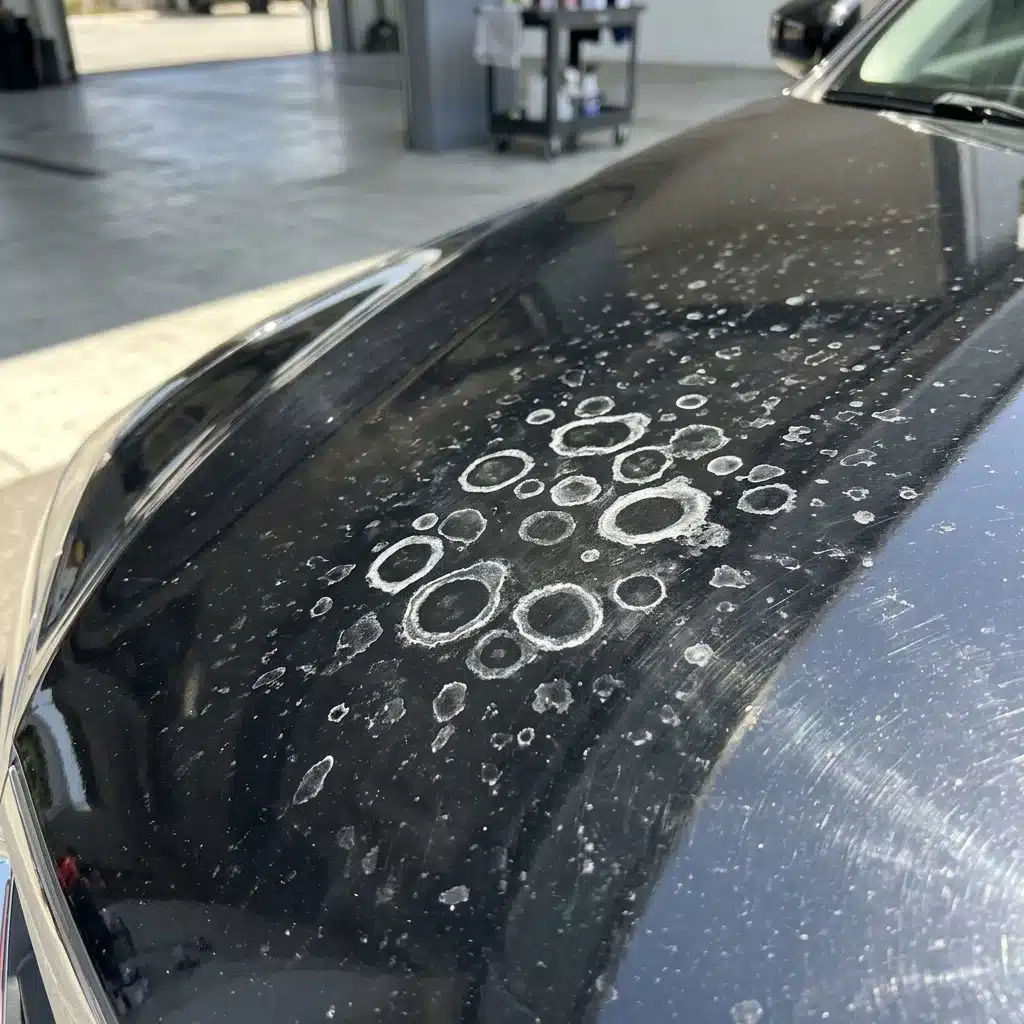
Three Types of Water Spots (and Why It Matters)
Not all water spots are the same. The type determines exactly how to remove them.
| Type | What It Looks Like | How Deep | Removal Method |
|---|---|---|---|
| Type I: Surface deposits | White or chalky rings sitting on top of the paint | On the surface only | Chemical dissolving (vinegar, water spot remover) |
| Type II: Bonded minerals | Dull, rough-textured spots that do not wash off | Bonded to clear coat | Machine polish or clay bar treatment |
| Type III: Etched spots | Visible craters or rings permanently indented into the clear coat | Below the clear coat surface | Wet sanding + multi-stage paint correction |
Type I spots are the easiest to deal with. If you catch them within a day or two, a simple chemical treatment will dissolve the minerals.
Type II spots are what most car owners are dealing with when they search for help. The minerals have chemically bonded to the clear coat surface and cannot be washed or wiped away. These require abrasive correction to remove.
Type III spots are the worst case. The minerals have actually etched into the clear coat, creating physical depressions in the paint surface. At this point, only wet sanding followed by paint correction can level the surface and restore clarity.
How to Remove Water Spots from Car Paint: Step by Step
Method 1: DIY Chemical Removal (Type I Spots Only)
This works for fresh, surface-level spots that have not bonded to the clear coat yet.
What you need:
- White vinegar (undiluted) or a dedicated automotive water spot remover
- Two clean microfibre towels
- Spray bottle
- Shade or covered area (never work in direct sun)
Steps:
- Wash the car thoroughly first to remove loose dirt and contaminants
- Mix equal parts white vinegar and distilled water in a spray bottle
- Spray the solution directly onto the water-spotted area
- Let it sit for 30 to 60 seconds (do not let it dry on the surface)
- Wipe gently with a clean, damp microfibre towel
- Rinse the area with clean water immediately
- Dry with a fresh microfibre towel
Important: Vinegar is acidic. If left on the paint too long, it can cause its own form of etching. Always rinse promptly and work in small sections.
If the spots remain after two applications, they have bonded to the clear coat and you need to move to Method 2.
Method 2: Clay Bar Treatment (Type I and Light Type II)
A clay bar physically pulls bonded contaminants off the paint surface.
Steps:
- Wash and dry the car completely
- Spray clay bar lubricant onto a small section (roughly 30cm x 30cm)
- Glide the clay bar gently across the surface in straight lines (not circles)
- Fold the clay to expose a clean face after each section
- Wipe the area with a microfibre towel
- Repeat across all affected panels
Clay barring removes surface-bonded minerals but cannot fix etching. If you run your fingernail across the spot and feel a physical indent, the damage is below the surface and needs machine correction.
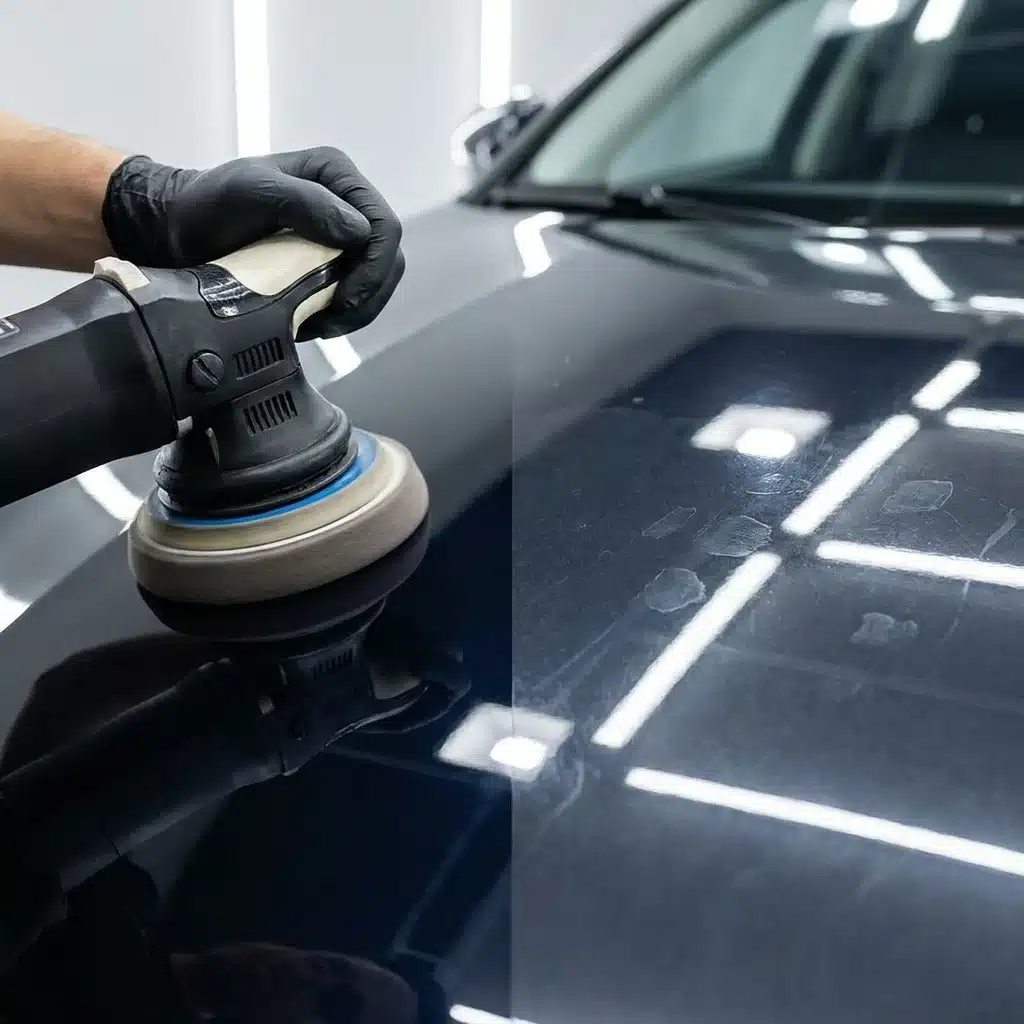
Method 3: Machine Polish / Paint Correction (Type II and III)
This is where professional results happen.
Machine polishing uses abrasive compounds to remove a microscopic layer of clear coat, levelling the surface and eliminating the etched craters left by mineral deposits.
What professional correction involves:
- Paint depth readings to confirm there is enough clear coat to safely correct
- Compound stage using a cutting compound to remove the damaged layer
- Polish stage to refine the surface and restore gloss
- Finishing stage to remove any hazing from the compound
For severe Type III etching, wet sanding may be required before polishing. This involves using ultra-fine sandpaper (2000 to 5000 grit) to level deep etch marks before the machine polishing stages begin.
At Endgame Detailing in Guildford, Sydney, paint correction for water spot damage is performed under controlled studio lighting to ensure every spot is identified and corrected across the entire vehicle.
Quick Comparison: DIY vs Professional Removal
| Factor | DIY Methods | Professional Correction |
|---|---|---|
| Spot types addressed | Type I only (surface deposits) | Type I, II, and III (all levels) |
| Risk of paint damage | Moderate (incorrect products or technique can cause marring) | Low (performed by trained technicians with paint depth gauges) |
| Time required | 1 to 3 hours | 4 to 12 hours depending on severity |
| Results | Good for fresh, light spots | Full restoration to pre-damage condition |
| Longevity | Spots likely to return without protection | Combined with coating, prevents recurrence |
| Cost | Low (basic consumer products) | Varies by severity; book a free inspection |
How to Prevent Water Spots from Coming Back
Removing water spots is only half the job. Without protection, they will return every time mineral-rich water touches your paint.
Ceramic or Graphene Coating
The most effective long-term prevention is a professional ceramic coating or graphene coating.
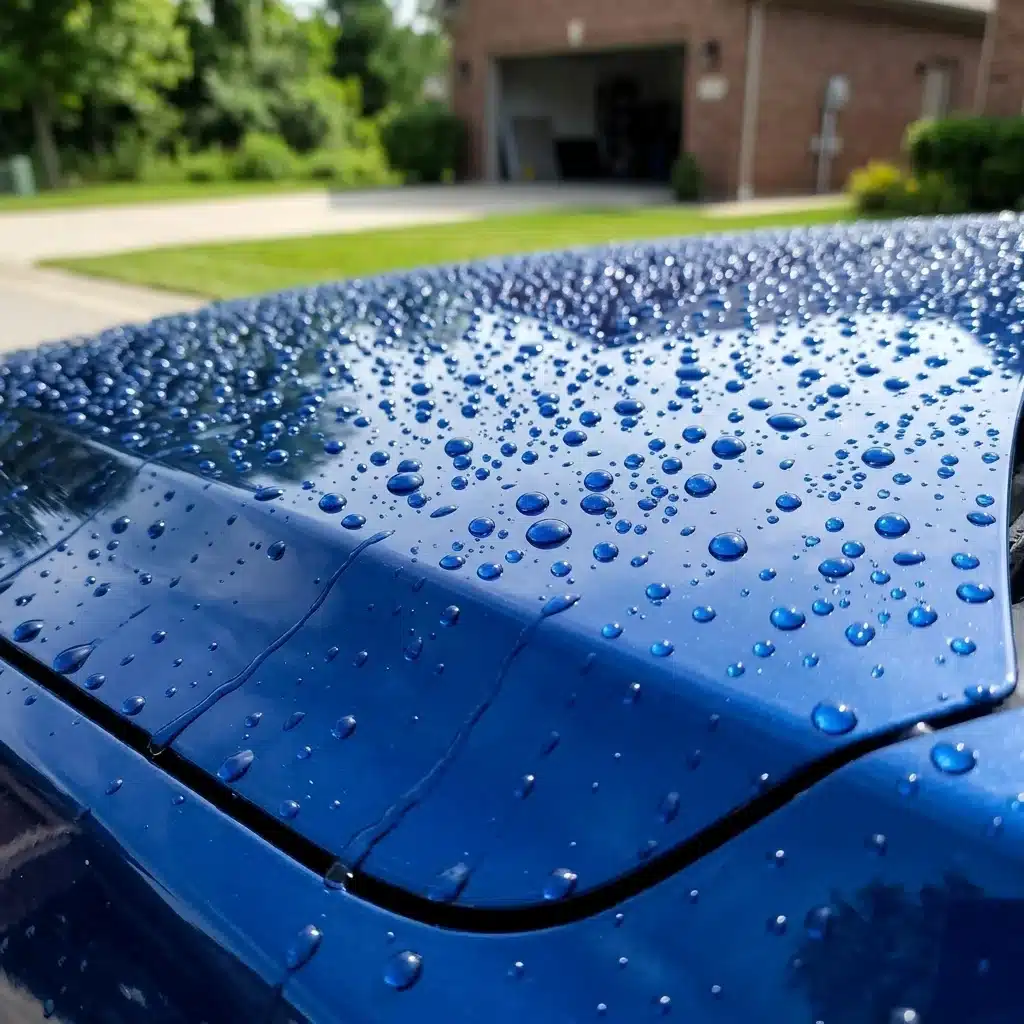
These coatings create a hydrophobic surface that causes water to bead tightly and roll off the paint before it can evaporate and leave deposits. Even if some water does sit on the surface, the slick coating prevents minerals from bonding to the clear coat, making them easy to wipe away during a regular wash.
Feynlab Ultra V3, our ceramic coating, is rated for 7 years with proper maintenance. For owners who want the deepest possible protection, combining ceramic coating with PPF on high-impact areas creates a complete defence system.
Paint Protection Film (PPF)
For vehicles parked outdoors or in areas with aggressive sprinkler systems, paint protection film adds a physical barrier that is completely immune to water spot etching. The film absorbs the mineral deposits instead of the paint, and any spots that form on the film can be removed easily without risk to the factory clear coat.
Full car PPF in gloss or matte covers every painted panel, so water spots and contaminants sit on the film instead of your clear coat.
Maintenance Habits That Prevent Spots
Even with a coating, good habits make a difference:
- Dry your car immediately after washing. Never let it air dry
- Use filtered or distilled water for the final rinse if your tap water is hard
- Move your car away from sprinklers or adjust sprinkler angles
- Wash bird droppings, tree sap, and water spots within 24 hours before they bond
- Follow a proper ceramic coating maintenance routine to keep the hydrophobic layer performing. Learn more about how to maintain ceramic coating
Got PPF or a coating from us? Skip the vinegar, clay bar and polish. Water spots form when minerals from tap water, rain or sprinklers dry on the surface, so dry the car straight after washing, rinse and dry it soon after rain or sprinklers, and don’t wash in direct sun. If spots do appear, don’t scrub them or use acids. Let us know on 0400 053 885.
Why Water Spots Are Worse on Dark Cars
If you drive a black, dark grey, dark blue, or deep red car, water spots are your worst enemy.
Dark paint shows every imperfection because of how light reflects off the surface. On a white car, light scatters in all directions and hides minor surface defects. On a dark car, light reflects like a mirror, making every ring, etch mark, and mineral deposit instantly visible.
This is why water spot removal on dark cars almost always requires machine correction rather than DIY methods. Even if a chemical treatment removes the mineral deposit itself, the micro-etching it left behind will still be visible under direct light.
For dark car owners, combining paint correction with a ceramic or graphene coating is the only way to achieve a truly flawless result. You can also read our guide on the best paint protection for black cars for a deeper breakdown.
When to Call a Professional
Some water spot damage is beyond what DIY methods can safely fix. Here are the signs you need professional help:
- Spots remain visible after washing and clay barring
- You can feel physical indents when running a fingernail across the spot
- The spots have been on the paint for more than a few weeks
- The affected panels look hazy or cloudy even after cleaning
- Your car has dark paint and the spots are visible from every angle
- You have a coated car and the spots are sitting under or within the coating layer
In these situations, attempting aggressive DIY correction risks burning through the clear coat or creating new swirl marks that are just as visible as the original spots.
Endgame Detailing uses paint depth gauges, controlled studio lighting, and multi-stage correction processes to remove water spot damage without compromising clear coat thickness.