How UV Radiation Damages Car Paint
Car paint is a layered system. From the outside in, it consists of clear coat (the transparent protective layer), base coat (the colour), primer, and bare metal or plastic underneath. UV radiation attacks this system from the top down.
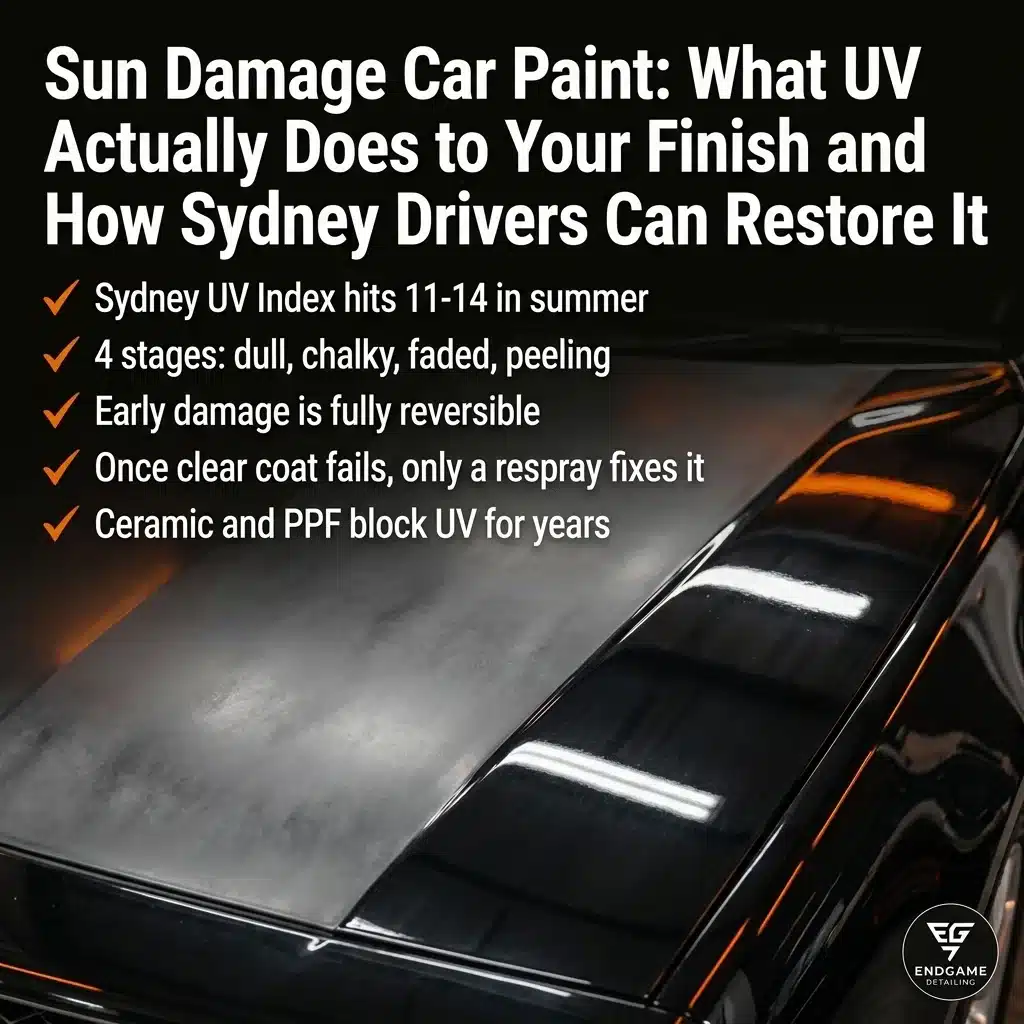
Stage 1: Clear coat degradation. UV breaks the molecular bonds in the clear coat, causing it to lose its transparency and reflective properties. The paint starts looking duller and less vibrant, even though the colour underneath has not actually changed yet. This stage is entirely reversible with professional paint correction.
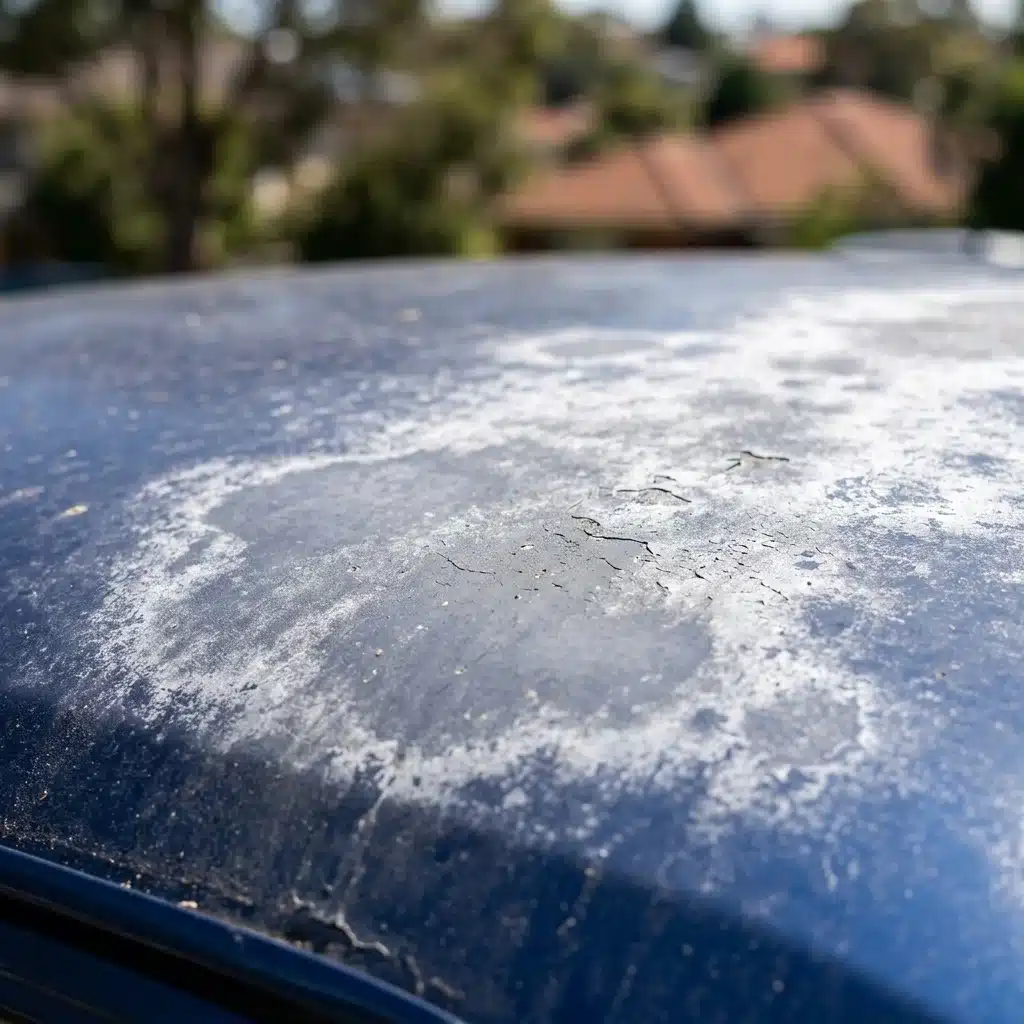
Stage 2: Oxidation and chalking. As the clear coat continues to degrade, oxygen penetrates the weakened surface and reacts with the paint pigments. The result is oxidation: a milky, hazy, or chalky appearance that gets progressively worse. On darker cars, oxidation appears as a whitish haze. On lighter cars, it shows as a dull, flat appearance with no depth. At this stage, correction can still recover significant gloss, but the clear coat is thinner and more vulnerable.
Stage 3: Colour fading. Once UV has penetrated through the weakened clear coat, it begins breaking down the colour pigments in the base coat itself. Red, black, and dark blue paints are most susceptible to visible fading. Single-stage paints (common on older cars and commercial vehicles) fade faster because they lack the protective clear coat layer entirely.
Stage 4: Clear coat failure. In advanced cases, the clear coat peels, flakes, or delaminates from the base coat. This appears as white, rough patches where the clear coat has lifted away. Once the clear coat has failed, no amount of polishing can restore it. The panel needs to be resprayed. This is the point of no return, and it is entirely preventable.
“The most frustrating thing we see is a car that was worth saving six months ago but the owner waited too long. Early sun damage is completely fixable with correction. Once the clear coat peels, the only option is a respray. That is a ten-times cost difference for a problem that was preventable.”
Why Sydney Is Especially Hard on Car Paint
Not all cities are equal when it comes to UV paint damage. Sydney’s combination of factors makes it one of the harshest environments for automotive paint in the world.
| Factor | How It Accelerates Sun Damage |
|---|---|
| UV Index | Sydney regularly exceeds UV Index 11 (extreme) in summer, with some days reaching 13 to 14 |
| Coastal salt air | Salt deposits on paint act as a magnifying lens for UV, concentrating damage on contaminated areas |
| Heat radiation from pavement | Parked cars absorb radiant heat from asphalt, which accelerates chemical breakdown in the clear coat |
| Limited garage parking | Many Sydney homes have no garage, leaving cars exposed to UV for their entire life |
| Outdoor commuter parking | Cars parked in open lots at train stations and workplaces receive 8 to 10 hours of direct UV daily |
The combination of extreme UV, heat, and salt means Sydney cars accumulate paint damage significantly faster than cars in cooler, lower-UV climates. A car that might last 10 years without visible sun damage in Melbourne or Hobart can show significant degradation within three to five years in Sydney without protection.
How to Tell If Your Car Has Sun Damage
Sun damage develops gradually, which is why many owners do not notice it until it is advanced. Here is what to look for at each stage.
Early damage (fully reversible): The paint looks less vibrant than it used to. Water does not bead cleanly. Under direct light, you can see fine haze or swirl patterns that were not visible before. The paint feels slightly rough to the touch compared to a protected or new surface.
Moderate damage (mostly reversible with professional correction): Visible fading is apparent, especially on horizontal panels (bonnet, roof, boot lid) that receive the most direct sun. A white or grey haze is visible on dark-coloured panels. Running your finger across the surface may leave a faint mark in the chalk residue.
Severe damage (partially reversible, may need respray): Clear coat is visibly peeling, flaking, or rough in patches. The colour is noticeably different between sun-exposed and shaded panels. The surface feels coarse and cannot be smoothed by hand.
If your car shows early or moderate damage, a professional assessment at Endgame Detailing can determine exactly how much correction is possible before any work begins.
Fixing Existing Sun Damage
The treatment depends on how far the damage has progressed.
For early to moderate damage: Professional paint correction removes the damaged, oxidised layer of clear coat through machine polishing. This reveals the fresh, undamaged clear coat underneath and restores gloss, depth, and colour vibrancy. For moderate oxidation, a multi-stage correction process using progressively finer compounds and polishes is required. For the most severe surface damage short of clear coat failure, wet sanding may be needed before the polishing stages to level the damaged surface.
For severe damage with clear coat failure: If the clear coat has peeled or delaminated, correction cannot restore it because there is no clear coat left to polish. The affected panels need to be resprayed by a body shop. Once resprayed, the new paint should be immediately protected with ceramic coating or PPF to prevent the cycle from repeating.
For car paint restoration on classic cars, JDM builds, or vehicles with significant sun damage across multiple panels, EGD offers comprehensive restoration services that combine correction, scratch removal, swirl mark removal, and water spot treatment into a single session.
The cut and polish cost guide and car detailing cost Sydney guide cover what to expect for pricing.
Preventing Sun Damage: Every Option Compared
Prevention is always cheaper, faster, and more effective than repair. Here is how each protection method performs against UV specifically.
| Protection Method | UV Protection Level | Duration | How It Works |
|---|---|---|---|
| No protection | None | N/A | Clear coat absorbs all UV directly, degradation begins immediately |
| Car wax | Minimal | 2 to 8 weeks | Thin sacrificial layer melts and breaks down under UV within weeks |
| Paint sealant | Low to moderate | 3 to 6 months | Synthetic polymer provides mild UV filtering while intact |
| Ceramic coating | High | 7 years (Feynlab Ultra V3) | Engineered UV-blocking compounds chemically bonded to the clear coat |
| Graphene coating | High | 10 years (Fireball Graphene Eternity) | Similar UV protection to ceramic, with extra slickness and gloss |
| PPF | High | 5 to 10 years | Physical barrier absorbs UV before it reaches the clear coat |
| PPF + ceramic coating | Maximum | 5 to 10 years | Physical barrier plus chemical UV blocking for complete protection |
For a detailed comparison of the main options, read ceramic coating vs wax, PPF vs ceramic coating, and the complete how to protect car paint guide.
Which Panels Get Damaged First?
Not every panel on your car receives the same UV exposure. Understanding which areas are most vulnerable helps you prioritise protection.
Highest risk (horizontal panels): The bonnet, roof, and boot lid receive the most direct overhead UV and are always the first to show fading, oxidation, and chalking. These panels should be the minimum coverage for any protection plan.
High risk (upper vertical panels): The upper sections of doors, front fenders, and rear quarter panels receive significant reflected and angled UV throughout the day.
Moderate risk (lower panels): Lower door sections, rocker panels, and lower bumpers receive less direct UV but are exposed to heat radiation from road surfaces.
Lower risk (shaded areas): Undersides, door jambs, and areas permanently shaded by the roof or body panels experience minimal UV damage.
For targeted protection on the highest-risk panels, front-end PPF covers the bonnet, bumper, and fenders. Full car PPF protects everything.
Daily Habits That Reduce Sun Damage
Professional protection is the most effective solution, but these daily habits also help.
Park in shade or undercover whenever possible. Even partial shade from a tree or building reduces UV exposure significantly. Use a car cover if your car is parked outdoors for extended periods without protection. Wash regularly with a pH-neutral car shampoo to remove salt, dust, and contaminants that accelerate UV damage. Never use dish soap or household cleaners, which strip any remaining protection from the surface. Dry properly with clean microfibre towels to avoid water spots that concentrate UV damage. Avoid automated brush car washes that add swirl marks to already UV-weakened clear coat.
For ongoing maintenance advice, read how to maintain ceramic coating and how often should you detail your car.
New Cars Are Not Immune
A common misconception is that new cars do not need protection because the paint is fresh. The opposite is true. New car paint begins degrading from UV exposure on the day it leaves the factory. The first year of unprotected sun exposure starts the oxidation process that compounds year after year.
Applying protection immediately on a new car means the paint never accumulates its first layer of UV damage. The new car paint protection guide explains why the first few weeks of ownership are the most important window for locking in long-term preservation.
For pre-sale preparation of a car that already has sun damage, the pre-sale car detailing guide covers how correction can significantly improve the car’s appearance and value before sale.
The most reliable way to stop sun damage coming back is a protective layer over the paint. A ceramic coating adds strong UV resistance, while paint protection film gives a physical barrier against UV and stone chips. If you want a fresh colour too, colour change PPF protects the factory paint underneath.