What Damages Car Paint?
Before choosing a protection method, you need to understand what you are protecting against. Car paint faces threats from multiple directions every single day.
UV radiation is the most relentless threat. Sydney receives some of the highest UV levels on the planet. Over time, UV breaks down the chemical bonds in paint pigments, causing colours to fade, clear coat to oxidise, and the finish to lose its depth and gloss. This process is invisible at first but becomes obvious after a few years of unprotected exposure. Read more about car paint oxidation and how it progresses.
Bird droppings and tree sap are acidic. When they land on unprotected paint and sit in the sun, the acid etches into the clear coat within hours, leaving permanent marks that no amount of washing can remove. On protected paint, these contaminants sit on top of the protective layer and can be wiped away before they reach the actual paint surface.
Road debris including stones, gravel, sand, and road grime physically impacts the paint, particularly on the bonnet, bumper, fenders, and mirrors. These create stone chips and micro-pitting that accumulate over time and are impossible to reverse without repainting.
Water spots form when mineral-rich water (from sprinklers, hard tap water, or rain) evaporates on the paint surface, leaving behind calcium and silica deposits that bond to and eventually etch the clear coat. The water spot removal guide covers what happens when these are left untreated.
Improper washing is ironically one of the biggest causes of paint damage. Automated car washes with brushes, dirty wash mitts, and incorrect drying techniques create networks of fine swirl marks and scratches that dull the finish and become increasingly visible in direct light.
“People spend tens of thousands on a car and then run it through a cheap drive-through car wash every week. Those brushes are full of grit from the car before yours. Every wash adds a new layer of micro-scratches. Within a year, the paint looks five years old.”
Every Paint Protection Method Ranked
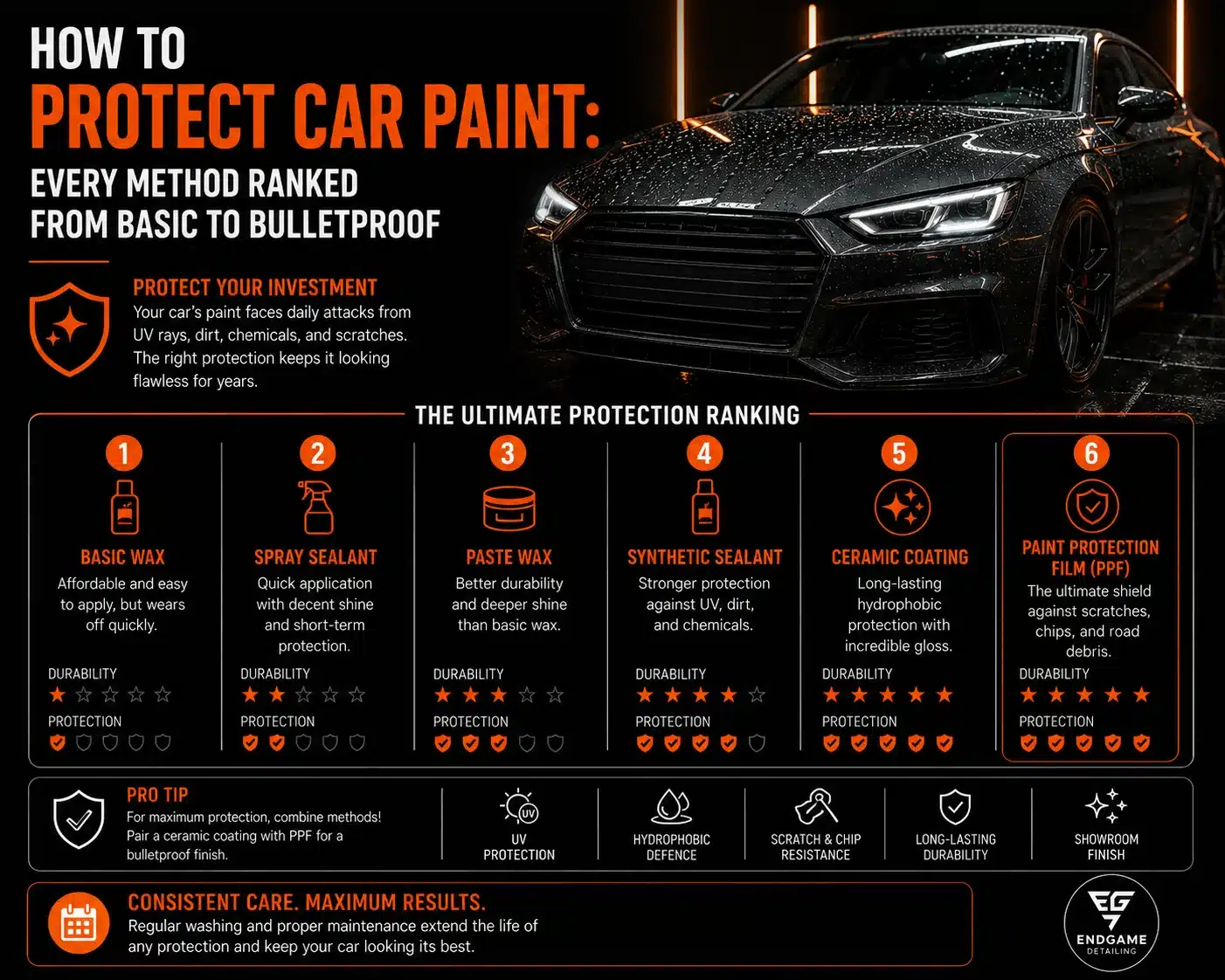
Here is how each protection option compares across the factors that matter most.
| Method | What It Does | Protection Level | Durability | Cost | Best For |
|---|---|---|---|---|---|
| Car wax (carnauba) | Adds temporary gloss and mild water repellency | Basic | 2 to 8 weeks | Low | Quick shine between details |
| Paint sealant (synthetic) | Polymer-based gloss and mild UV protection | Basic to moderate | 3 to 6 months | Low | Budget-conscious owners |
| Ceramic coating | Chemical bond to clear coat providing UV, chemical, and hydrophobic protection | High | 7 years (Feynlab Ultra V3) | Moderate to high | Daily drivers, enthusiasts, long-term protection |
| Graphene coating | Similar to ceramic with a slicker feel and stronger water beading | High | 10 years (Fireball Graphene Eternity) | Moderate to high | Owners wanting cutting-edge technology |
| Paint protection film (PPF) | Physical barrier that absorbs stone chips, scratches, and impact | Maximum (physical) | 5 to 10 years | High | High-impact areas, luxury/performance vehicles |
| PPF + ceramic coating | Physical barrier plus chemical protection and hydrophobic performance | Maximum (complete) | 5 to 10 years | Highest | Owners wanting total, no-compromise protection |
The detailed comparison between ceramic coating and wax covers why coating outperforms wax in every measurable category. The PPF vs ceramic coating comparison explains when each is the right choice. And the car wrap vs ceramic coating guide covers the difference between appearance change and paint protection.
Level 1: Wax and Sealants (Basic Protection)
Wax and paint sealants are the entry point for paint protection. They sit on top of the paint as a sacrificial layer that adds temporary gloss and mild water repellency.
What they protect against: Light dust adhesion, mild water exposure, very minor UV filtering while fresh.
What they do not protect against: Chemical etching from bird droppings and tree sap, stone chips, scratches, sustained UV exposure, or water spot etching. Once the wax breaks down (within weeks), the paint is completely unprotected.
When they make sense: Between professional details for a quick gloss boost, on cars you are selling soon, or when budget does not allow for professional coating. They are not a long-term protection strategy.
Level 2: Ceramic Coating (Professional Protection)
Ceramic coating is where genuine, lasting paint protection begins. Unlike wax that sits on the surface and washes off, ceramic coating chemically bonds to the clear coat and becomes a semi-permanent part of the paint system.
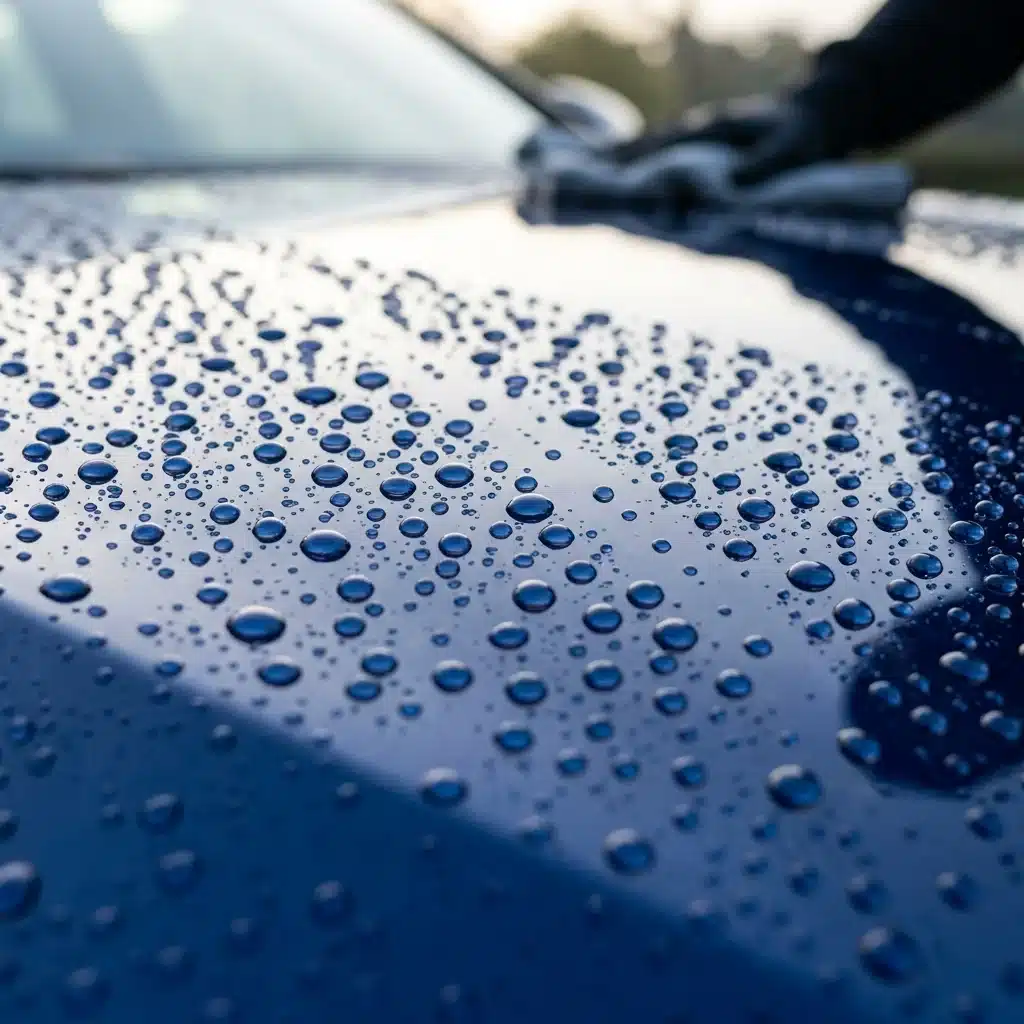
What it protects against: UV radiation (engineered UV blockers slow fading and oxidation), chemical etching (resists bird droppings, tree sap, bug splatter, and industrial fallout), hydrophobic performance (water beads and sheets off, carrying dirt and minerals with it), and minor abrasion resistance.
What it does not protect against: Physical impact. Stone chips, deep scratches, and door dings will penetrate a ceramic coating. For physical protection, PPF is required.
Application process: Professional ceramic coating requires full paint decontamination, paint correction to remove existing swirl marks and defects, panel wipe to remove oils, hand application of the coating panel by panel, and 12 to 24 hours of controlled curing. The correction step is what makes the biggest visual difference; the coating then locks that corrected finish in place.
The full value proposition is covered in is ceramic coating worth it. For pricing, see the ceramic coating cost Sydney guide. For longevity details, read how long ceramic coating lasts.
At Endgame Detailing in Guildford, every ceramic coating job includes paint correction as standard because coating over uncorrected paint seals in existing defects permanently.
Level 3: Graphene Coating (Advanced Protection)
Graphene coating is the newest evolution in paint protection technology. It delivers similar benefits to ceramic with some notable improvements.
Advantages over ceramic: A slicker feel with stronger water beading, slightly improved durability in some formulations, and stronger anti-static properties that repel dust more effectively.
When to choose graphene over ceramic: If your car lives outdoors, if you want an extra-slick finish that is quicker to wash, or if you want the latest technology available. The best graphene coating for cars guide covers the technical differences in detail.
Endgame Detailing offers both ceramic and graphene coating and recommends the right option based on your specific vehicle, parking conditions, and maintenance habits.
Level 4: Paint Protection Film (Maximum Protection)
PPF is the only protection method that stops physical damage. It is a transparent, self-healing polyurethane film applied to the car’s painted surfaces that absorbs impact, resists scratches, and protects the factory paint underneath from everything the road throws at it.
What it protects against: Stone chips, gravel impact, sand pitting, key scratches, door edge chips, bug splatter etching, minor abrasion, and UV exposure. Self-healing variants recover from light scratches when exposed to heat.
Coverage options:
Front-end PPF covers the highest-impact areas: bonnet, front bumper, fenders, mirrors, and door edges. This is the most popular option and provides the best balance of protection and cost.
Full car PPF wraps every panel in film for complete, bumper-to-bumper physical protection. This is the premium option for luxury, performance, and collector vehicles.
Colour-changing PPF combines physical protection with a colour transformation, giving you both a new look and full impact resistance in a single application.
For pricing details, see the PPF cost Sydney guide. For the comparison with wraps, read vinyl wrap vs PPF.
Level 5: PPF + Ceramic Coating (Complete Protection)
The most comprehensive approach combines PPF on high-impact panels with ceramic coating over the rest of the vehicle (and on top of the PPF itself).
This gives you physical protection where the car is most vulnerable to impact, chemical and UV protection across every surface, hydrophobic performance that makes the entire car easier to wash, and enhanced gloss depth across both the PPF and bare paint sections.
This is the approach most luxury car owners, JDM enthusiasts, and show car builders choose because it leaves nothing unprotected. For new car owners considering this route, the new car paint protection guide explains why timing matters.
The Foundation: Paint Correction Before Protection
No matter which protection method you choose, the paint surface must be properly prepared first. This is the step that separates professional results from amateur ones.
Paint correction uses machine polishing to remove existing swirl marks, scratches, water spots, and oxidation from the clear coat. It restores the paint to a smooth, defect-free surface with maximum gloss depth.
Any protection product applied over uncorrected paint seals those defects in permanently. Wax fills them temporarily (they reappear when the wax wears off). Coating locks them in for years. PPF preserves them underneath the film.
For severe defects, wet sanding may be required before polishing. For a full breakdown of what this step involves and costs, read the cut and polish cost guide.
Maintenance: Keeping Your Protection Working
Every protection method requires some level of ongoing care. Here is what each needs.
Wax: Reapply every two to eight weeks. The maintenance cycle never stops.
Ceramic/graphene coating: Wash with pH-neutral shampoo every two weeks. Annual coating inspection and booster application. Never use a car wash of any kind or any wax. Full maintenance details are in the how to maintain ceramic coating guide.
PPF: Hand wash only, every two weeks after a 2–4 week cure. A pressure washer is fine after the cure on a wide fan at least 1 m back, never at the edges. Clean bug splatter and bird droppings promptly. If you notice lifting or bubbling, leave it and let your installer know.
All methods: Remove bird droppings, tree sap, and bug splatter within 24 hours regardless of what protection you have. No product is immune to prolonged acid exposure.
For general detailing frequency guidance, read how often should you detail your car.
Choosing the Right Protection for Your Situation
The best protection method depends on your priorities.
New car, long-term keeper: Front-end PPF plus ceramic coating over the rest. Protects the investment from day one and maintains resale value.
Daily driver, practical budget: Ceramic coating alone. Cuts maintenance dramatically and protects against UV, chemicals, and contaminants for years.
Enthusiast or show car: Full PPF plus ceramic coating on top. Maximum protection that preserves factory paint in immaculate condition underneath.
Classic car for weekend drives: a ceramic or graphene coating for real protection between shows (no wax over the top).
Selling soon: Quick detail with paint sealant for kerb appeal. No need for a long-term investment. See the pre-sale detailing guide.
Not sure which option fits? Book a consultation with Endgame Detailing and get a recommendation based on your specific car, usage, and budget.