What Ceramic Coating Actually Does (and Does Not Do)
Before weighing whether it is worth the investment, you need to understand what ceramic coating actually is. There is a lot of misinformation out there, so here is the straightforward version.
Ceramic coating is a liquid polymer (typically SiO2-based) that is hand-applied to your car’s exterior surfaces. When it cures, it forms a semi-permanent chemical bond with the clear coat, creating a protective layer that sits on top of the paint.
What it does:
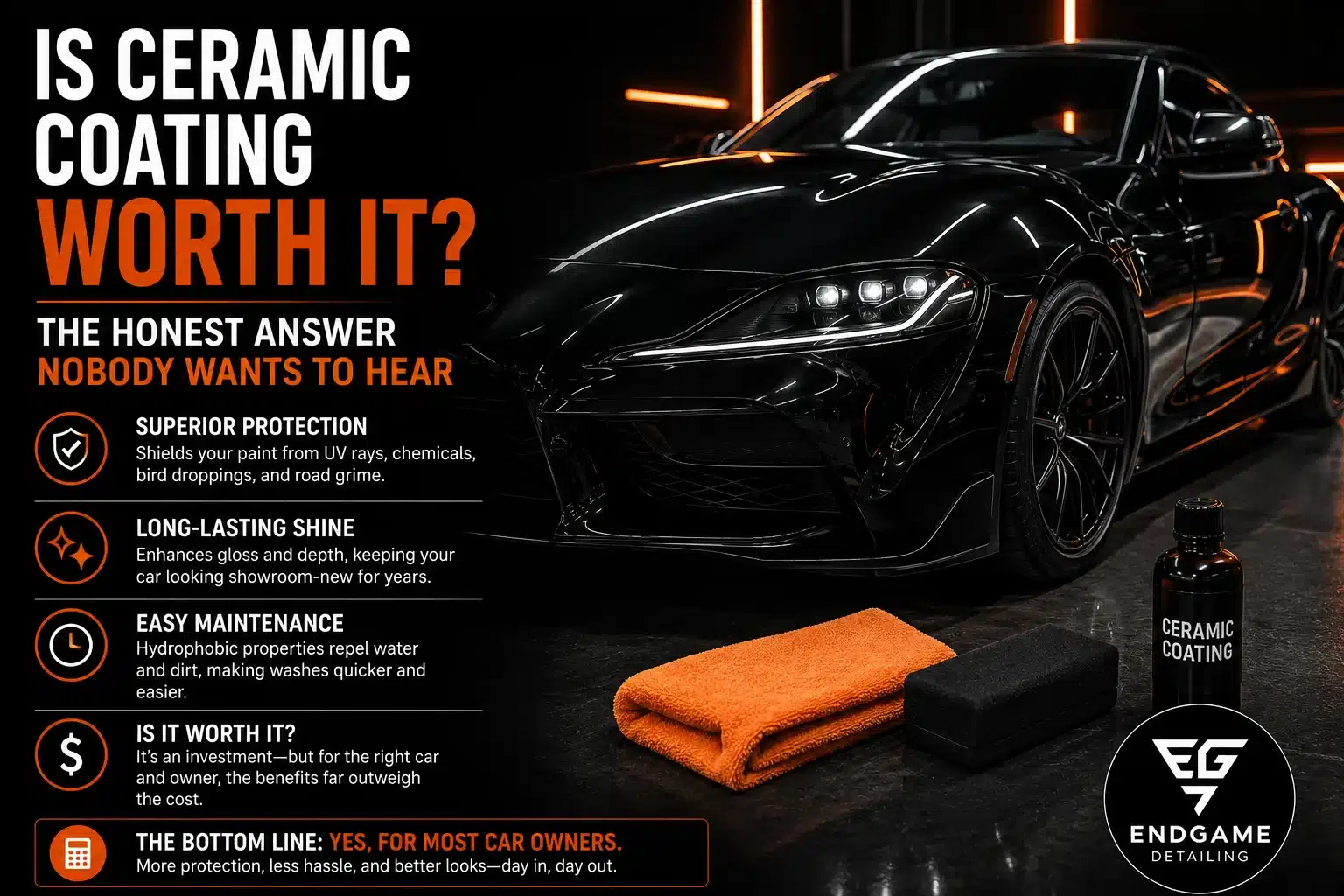
- Creates a hydrophobic surface that causes water to bead and sheet off, carrying dirt with it
- Provides UV protection that slows paint oxidation and fading
- Resists chemical etching from bird droppings, tree sap, and bug splatter
- Makes the paint significantly easier to wash because contaminants cannot bond as aggressively
- Enhances depth and gloss, making the paint look richer and more reflective
- Reduces the frequency of professional detailing needed to maintain the same standard
What it does not do:
- Stop rock chips or deep scratches. That is what paint protection film (PPF) is designed for
- Eliminate the need to wash your car. It makes washing easier and less frequent, but you still need to maintain it
- Fix existing paint damage. A coating locks in whatever is underneath. If your paint has swirl marks, water spots, or oxidation, those must be corrected first
- Last forever. Even the best professional coatings degrade over time and need either a top-up or reapplication
“The biggest misconception we deal with is people thinking ceramic coating makes their car bulletproof. It does not. What it does is make the paint dramatically more resilient to everyday environmental damage and cut your maintenance time in half. That is the real value.”
The Real Cost of Ceramic Coating in Sydney
Cost is usually the first objection, so let us address it directly.
| Coating Type | What affects the cost | Durability | Best For |
|---|---|---|---|
| Entry-level consumer product (DIY) | Product only; results depend on your time and skill | 3 to 12 months | Hobbyists who detail regularly |
| Mid-tier professional coating | Vehicle size, paint condition and prep needed | 2 to 4 years | Daily drivers who want lasting protection |
| Premium professional coating | Correction stage needed and coating type | 7 years (Feynlab Ultra V3) | Enthusiasts, luxury cars, long-term investment |
| Graphene-infused professional coating | Correction stage needed and coating type | 10 years (Fireball Graphene Eternity) | Owners who want maximum water repellency and slickness |
These prices typically include paint decontamination and at least a single-stage paint correction to prepare the surface. If the paint needs multi-stage correction due to heavy swirl marks or defects, the prep work adds to the total.
For a more specific breakdown, the ceramic coating cost in Sydney guide covers the variables in detail.
The critical point: comparing the upfront cost of ceramic coating to doing nothing is misleading. You need to compare it to the cumulative cost of not having it.
The Maths That Makes It Worth It
Here is where the value proposition becomes concrete. Let us compare how often a daily driver needs professional work in Sydney with and without professional ceramic coating.
| Expense | Without Coating (Annual) | With Coating (Annual) |
|---|---|---|
| Professional detail (frequency) | Every 6 to 8 weeks (~7 per year) | Every 4 to 6 months (~2 per year) |
| Paint correction needed | Every 12 to 18 months | Every 2 to 3 years |
Over three years, an unprotected daily driver needs far more frequent details and paint correction than a ceramic-coated car, so the coating offsets much of its own cost.
The coating pays for itself through reduced maintenance. That is the honest maths.
Who Should Get Ceramic Coating
Ceramic coating delivers the most value in these situations:
New car owners. The best time to coat is when the paint is in its best condition. Applying ceramic protection within the first few weeks means the paint never accumulates its first round of bonded contamination and UV damage. The new car paint protection guide explains why timing matters.
Daily drivers in Sydney. UV exposure, industrial fallout, and bird activity in Sydney are aggressive. A coating dramatically slows the degradation cycle that unprotected paint goes through every day.
Enthusiasts and JDM owners. If you have invested in paint correction, custom colour work, or show preparation, a coating locks that finish in place and protects the investment.
Anyone planning to keep their car for two or more years. The longer you keep the car, the more the coating saves you in reduced maintenance and preserved resale value.
Luxury and prestige vehicles. The paint on high-end vehicles is often softer and more susceptible to swirl marks. Coating adds a sacrificial layer that protects the factory finish.
Who Should Skip It (for Now)
Ceramic coating is not the right fit for everyone. Save your money if:
- You plan to sell within six months. The coating will not recoup its cost in that timeframe
- Your paint is heavily damaged and you do not want correction first. Coating over swirl marks, scratches, or oxidation seals those defects in permanently
- You never wash your car. A coating is not self-cleaning. Without proper maintenance, it degrades faster and delivers no visual benefit
- You want physical impact protection. For stone chips, door dings, and scratch resistance, PPF is the correct solution. The detailed comparison between PPF and ceramic coating covers when to choose each
Ceramic Coating vs the Alternatives
People searching “is ceramic coating worth it” are usually also weighing other options. Here is how they compare.
| Protection Type | Durability | Physical Protection | Gloss Enhancement | Maintenance Reduction |
|---|---|---|---|---|
| Carnauba wax | 4 to 8 weeks | None | Moderate (warm glow) | Minimal |
| Paint sealant | 3 to 6 months | None | Moderate | Slight |
| Ceramic coating (pro) | 7 years (Feynlab Ultra V3) | Chemical resistance only | High (deep mirror gloss) | Significant |
| Graphene coating (pro) | 10 years (Fireball Graphene Eternity) | Chemical resistance, extra slickness | High | Significant |
| Paint protection film | 5 to 10 years | Excellent (physical barrier) | Preserves factory finish | Moderate |
| PPF + ceramic coating | 5 to 10 years | Maximum | Maximum | Maximum |
For most car owners, a professional ceramic coating hits the sweet spot of cost, protection, and visual enhancement. For high-value vehicles or owners who want complete coverage, the combination of front-end PPF on impact zones with ceramic coating over the rest is the approach that delivers the best balance.
If you are specifically considering graphene, the best graphene coating for cars guide covers what makes it different from ceramic and when it is the better choice.
What the Application Process Looks Like
Understanding the process helps you appreciate why professional application costs what it does and why DIY products cannot match the results.
Step 1: Full decontamination. The car is washed, clayed, and chemically decontaminated to remove all bonded contaminants from the paint surface.
Step 2: Paint correction. Swirl marks, light scratches, water spots, and oxidation are machine-polished out. This is the most labour-intensive step and the reason professional coating costs include correction. If this step is skipped, the coating seals those defects in permanently.
Step 3: Panel wipe and preparation. All polishing oils and residues are removed with an IPA wipe-down so the coating bonds directly to clean clear coat.
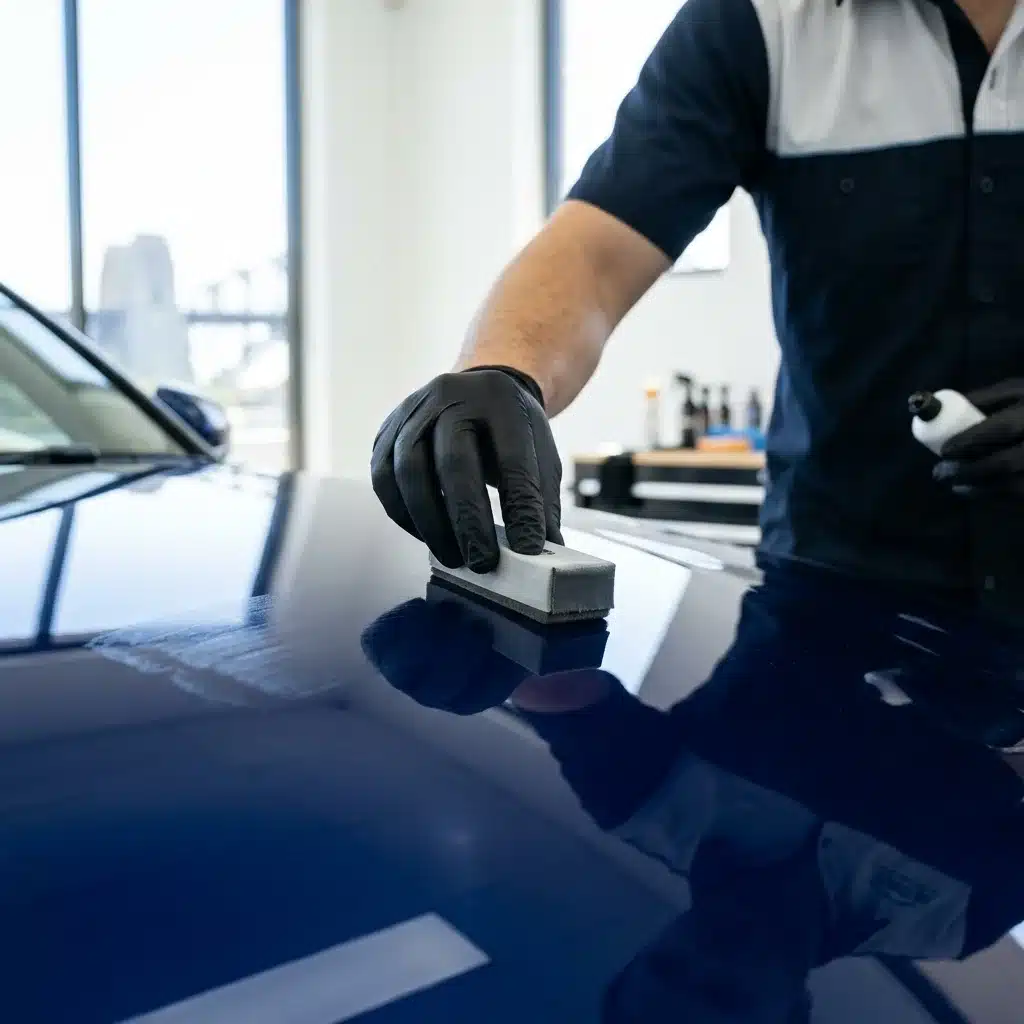
Step 4: Coating application. The ceramic liquid is applied panel by panel using a suede applicator, levelled with a microfibre cloth, and left to flash before the next panel. This takes steady hands and consistent technique.
Step 5: Curing. The car sits in a controlled environment for 12 to 24 hours while the coating fully cures and hardens. During this time, the car cannot be exposed to water or contaminants.
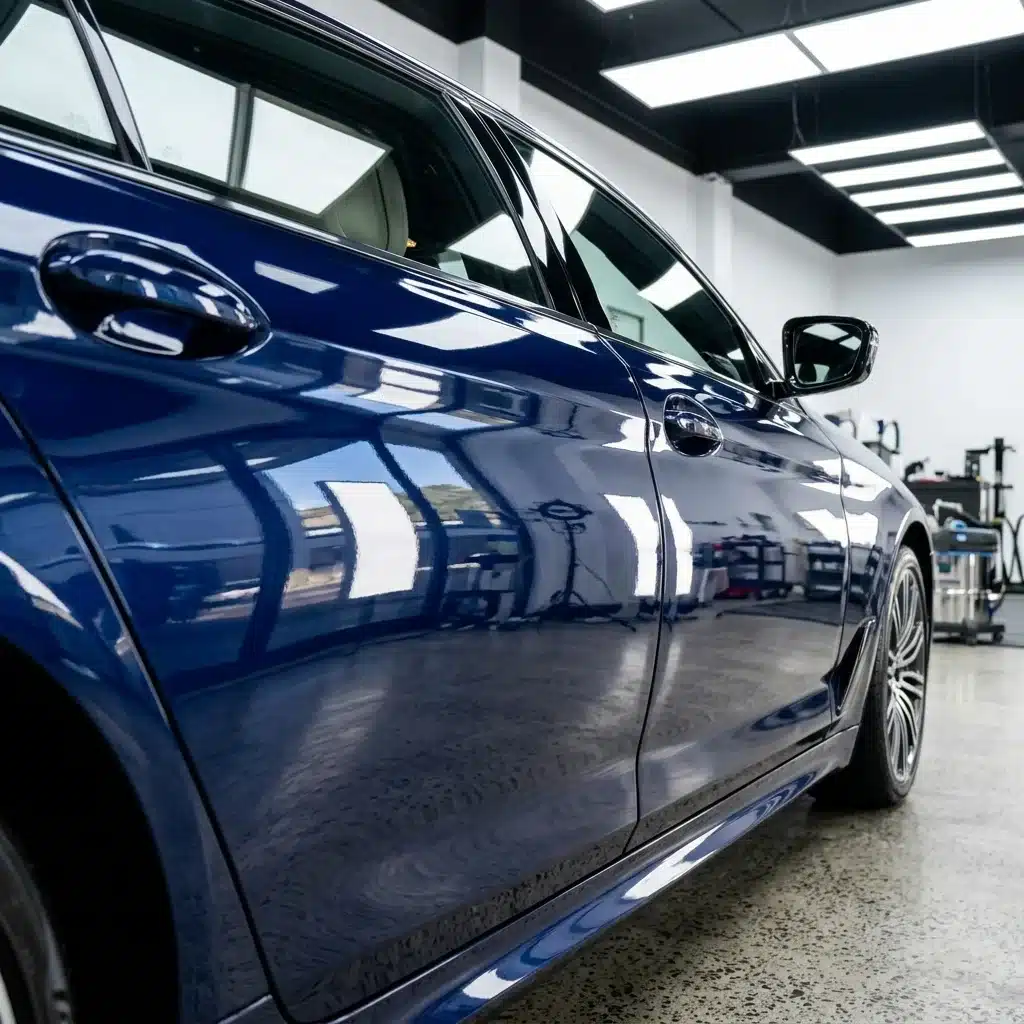
At Endgame Detailing in Guildford, the process is performed in a sealed studio with controlled lighting to ensure full coverage across every panel.
How to Maintain Ceramic Coating After Application
A coating is not maintenance-free. It is maintenance-reduced.
- Wash every two weeks using pH-neutral car shampoo and the two-bucket method
- Dry immediately after washing to prevent water spots
- Never use a car wash of any kind; brushes micro-scratch the coating and touchless chemicals wear it
- Remove bird droppings and tree sap within 24 hours before the acid etches through the coating layer
- Book an annual coating inspection to check integrity and apply a maintenance booster
For the full maintenance breakdown, the how to maintain ceramic coating guide covers everything you need to know. To understand how long ceramic coating lasts under different conditions, that guide covers the variables.