Why Before and After Photos Matter
Anyone can claim they deliver great results. Before and after photos taken under proper lighting are the only way to verify that claim.
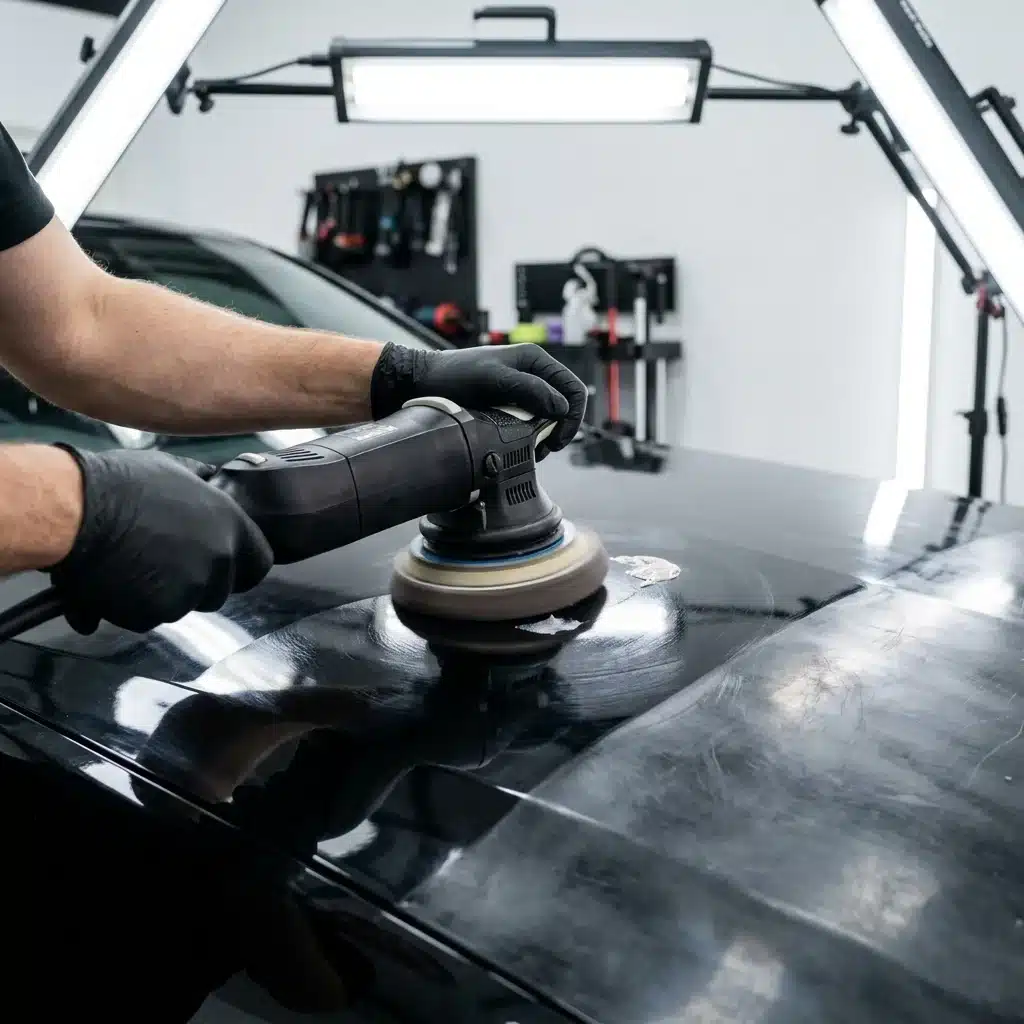
The reason lighting matters is that paint defects like swirl marks, scratches, and haze are only fully visible under direct, controlled light. A car can look “fine” in shade or overcast conditions, but under studio halogen or LED panels, every imperfection becomes visible. That is why professional detailers use controlled lighting for both assessment and documentation.
“If a detailer cannot show you before and after photos taken under proper lighting, you have no way of knowing what they actually did. The camera does not lie when the light is right.”
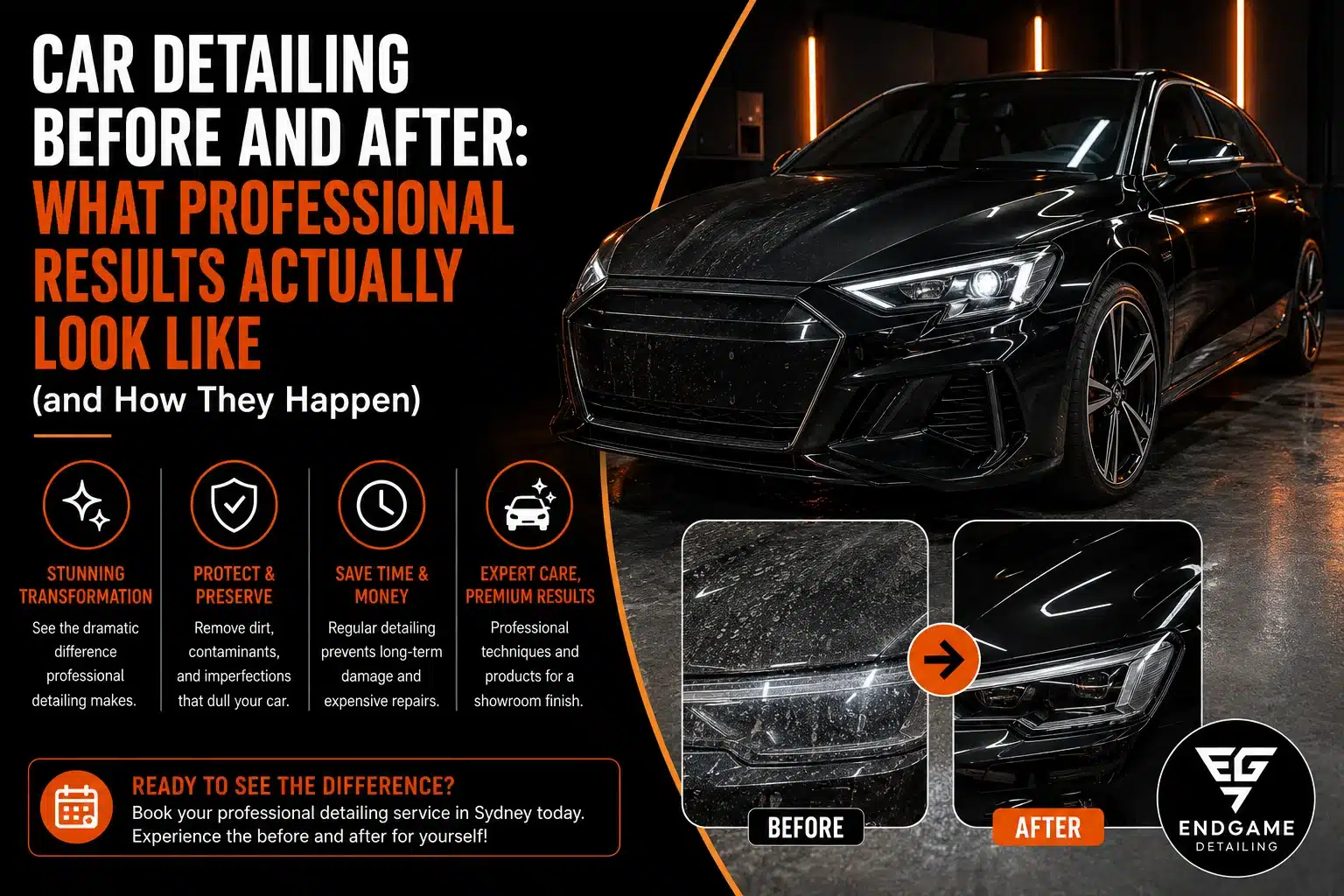
At Endgame Detailing, every vehicle is photographed under studio lighting before work begins and after completion. This documentation serves two purposes: it shows you exactly what was achieved, and it creates a baseline record of your paint’s condition for future reference.
Paint Correction: The Most Dramatic Before and After
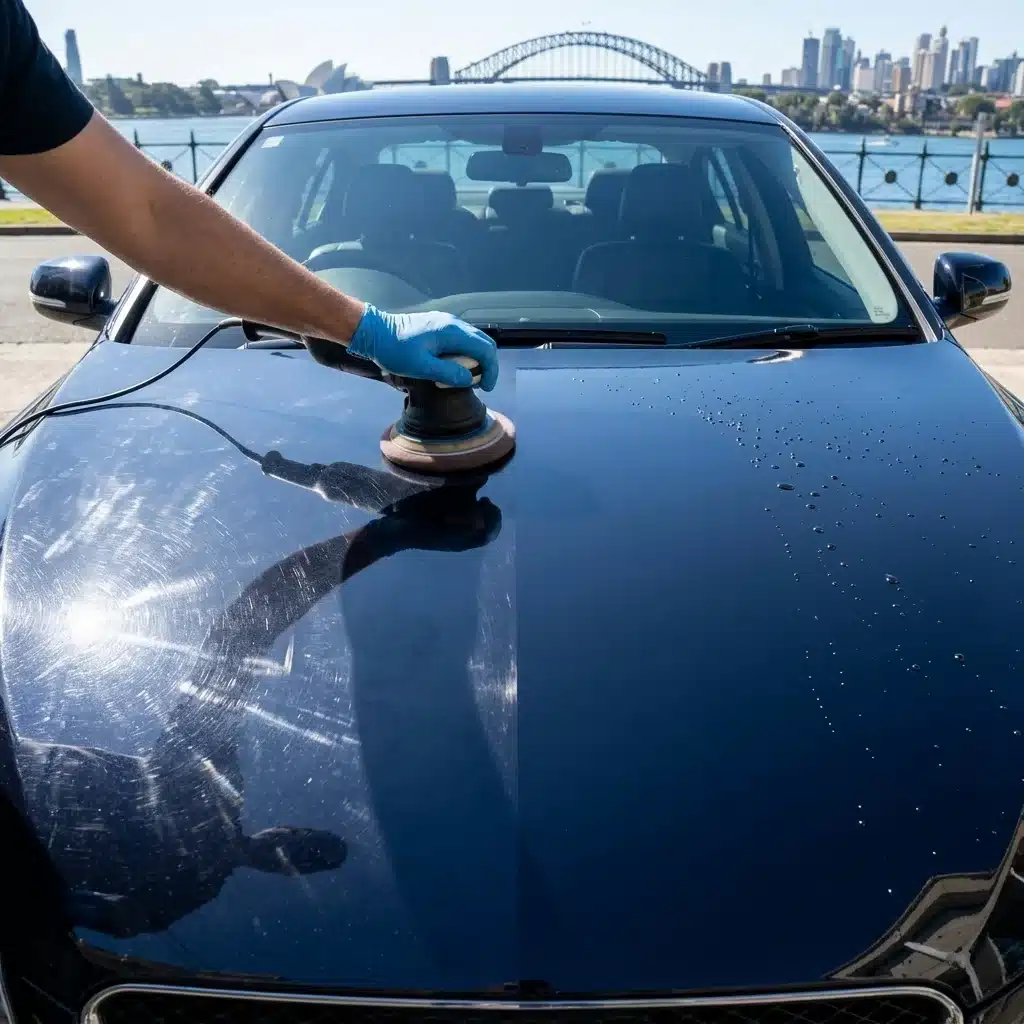
Paint correction produces the single most visually dramatic transformation in professional detailing. It is the process of machine polishing the clear coat to remove defects that dull and distort the paint’s appearance.
What Paint Correction Fixes
- Swirl marks from improper washing (circular haze patterns visible in direct light)
- Light scratches from fingernails, keys, automated car washes, and general contact
- Water spot etching where mineral deposits have eaten into the clear coat
- Oxidation where UV exposure has broken down the paint’s surface layer
- Buffer trails or holograms from previous poor-quality machine polishing
What the Transformation Looks Like
| Before | After |
|---|---|
| Hazy, dull surface that scatters light | Deep, mirror-like gloss that reflects like glass |
| Visible swirl patterns under any direct light | Clean, defect-free surface under all lighting |
| Scratches and marks visible at every angle | Scratches removed or significantly reduced |
| Water spots and etching across panels | Smooth, uniform surface across all panels |
| Paint looks old regardless of the car’s age | Paint looks showroom-fresh regardless of age |
The level of correction depends on the paint’s condition and the amount of clear coat available to work with. A single-stage polish addresses light swirls and haze. A multi-stage correction tackles deeper scratches, heavy oxidation, and severe water spot damage. For the most extreme cases, wet sanding is used before the polishing stages to level deep defects.
The full process, what it involves, and what it costs are covered in the paint correction Sydney service page and the cut and polish cost guide.
Ceramic and Graphene Coating: Locking In the Transformation
Paint correction creates the visual transformation. Coating locks it in place and protects it.
Before Coating
- Corrected paint is unprotected and vulnerable to re-contamination within days
- UV, bird droppings, tree sap, and water spots immediately begin degrading the fresh finish
- Without protection, the corrected paint will need re-polishing within six to twelve months
After Coating
- A chemically bonded hydrophobic layer repels water, contaminants, and UV
- The deep gloss from correction is preserved and often enhanced by the coating’s refractive properties
- Maintenance drops dramatically: easier washing, less frequent detailing, and longer intervals between corrections
- The coating lasts two to seven years depending on the product tier and maintenance
The before and after difference with coating is not always as visually dramatic as correction (the big transformation already happened during polishing), but it is visible in how the paint behaves. Water beads tightly and rolls off. Dirt slides away during washing instead of bonding. The gloss stays consistent month after month instead of degrading within weeks.
For a full breakdown, read is ceramic coating worth it, how long ceramic coating lasts, and the comparison between ceramic coating and graphene.
PPF: Invisible Protection with a Visible Difference
Paint protection film does not change how the paint looks. It changes what happens to it over time.
The Before and After Over Time
The real before and after with PPF is not seen on day one. It is seen after twelve, twenty-four, or thirty-six months of driving.
| Scenario | Without PPF (After 2 Years) | With PPF (After 2 Years) |
|---|---|---|
| Bonnet and bumper | Rock chips, sand pitting, stone marks | Film absorbed all impacts, paint untouched underneath |
| Door edges | Chips and scratches from adjacent car doors | Film self-healed minor scratches, no paint damage |
| Front fenders | Road debris marks, insect etching | Film protected against all contact, factory finish preserved |
| Mirrors and A-pillars | Visible wear from highway driving | Clean, protected, no visible deterioration |
The film itself may show signs of wear over its lifetime, but when it is eventually removed, the factory paint underneath is in the same condition as the day the film was applied. That is the before and after that matters most for resale value and long-term preservation.
For coverage options, see front-end PPF for high-impact panels or full car PPF for complete coverage. The PPF vs ceramic coating comparison explains when to choose each.
Interior Detailing: The Transformation Nobody Expects
Interior before and after results often surprise owners more than exterior work. People get used to the gradual decline of their cabin and stop noticing how much it has changed.
What Interior Detailing Addresses
- Leather seats: Cracking, discolouration, body oil staining, dye transfer from clothing
- Fabric seats and carpet: Ground-in dirt, food stains, pet hair, odour absorption
- Dashboard and trim: UV fading, dust buildup in vents and crevices, sticky residue
- Headliner: Staining, sagging, nicotine or smoke discolouration
- Glass: Interior haze from off-gassing, fingerprints, film buildup
A full interior detail includes steam cleaning to sanitise and deep-clean all surfaces, leather restoration to recondition and protect leather, and meticulous cleaning of every surface, vent, and crevice.
The before and after on a neglected interior is one of the most satisfying transformations in detailing. A cabin that looked and smelled like it needed replacing can come back to near-showroom condition in a single session.
What Separates Studio-Grade Results from Average Detailing
Not all before and after results are equal. Here is what makes the difference.
Controlled lighting. Studio lighting reveals every defect during correction and ensures nothing is missed. Mobile detailing under natural light cannot achieve the same consistency.
Time invested. A proper paint correction takes eight to sixteen hours depending on severity. Quick-service “detail” shops that promise results in two hours are cutting corners.
Product quality. Professional-grade compounds, polishes, coatings, and PPF films perform at a different level than consumer products. Endgame Detailing uses studio-grade products matched to each vehicle’s specific paint type.
Technician experience. Different paint systems (Japanese, German, Italian, American) have different hardness levels, clear coat thickness, and correction requirements. An experienced detailer adjusts technique, pad selection, and compound aggressiveness for each vehicle.
Paint depth measurement. Professional studios use paint thickness gauges to measure clear coat before and during correction, ensuring safe material removal without burning through the finish.