The Myth of Perfect Factory Paint
The biggest misconception new car owners have is that their paint is flawless because it is new. The reality is that modern vehicle manufacturing prioritises speed, volume, and consistency over hand-finished perfection.
Here is what happens to your car’s paint between the factory and your driveway.
At the factory paint shop. Your car’s body shell passes through an automated spray booth where primer, base coat, and clear coat are applied robotically. The process is efficient but not perfect. Dust particles can land on the wet paint and become trapped in the clear coat (dust nibs). The spray pattern can create a textured surface (orange peel) rather than a mirror-smooth finish. The factory’s final quality check involves a quick machine polish that often leaves circular buffer marks (holograms).
During transport. Your car travels from the factory (potentially overseas) on a ship, then by truck to the dealer. During this journey, it is exposed to sea salt, industrial fallout, rail dust, bird droppings, and physical contact from loading and unloading. Transport protective film is applied to some panels, but adhesive residue often remains when the film is removed.
At the dealer. Dealer preparation (PDI) involves removing transport film, washing the car, and performing a basic clean. This process is typically done by junior staff using the quickest methods available: drive-through wash bays, cheap wash mitts, and rapid drying. Each of these steps adds swirl marks and micro-scratches to the paint.
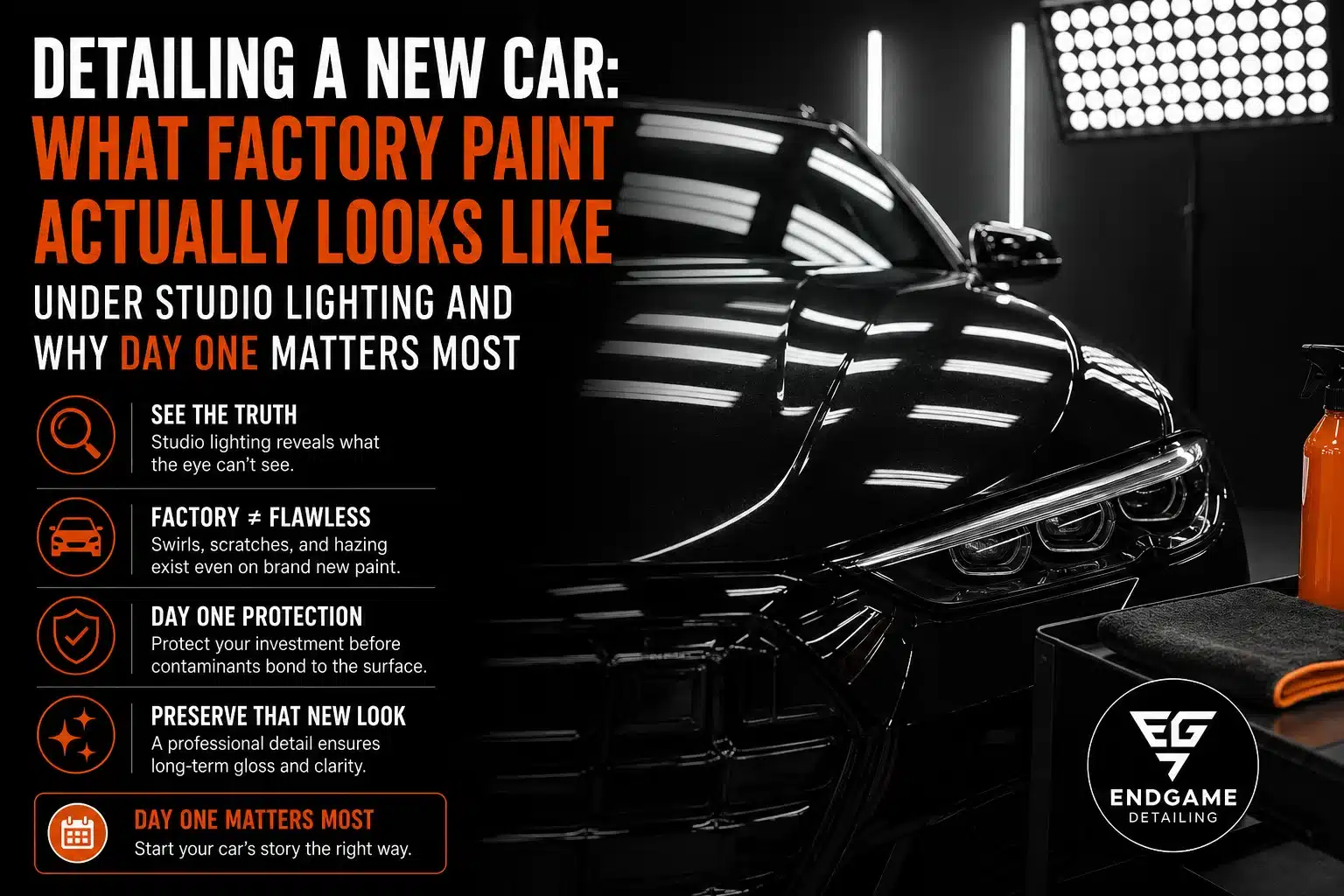
By the time you drive your new car home, the paint has been through multiple processes that have each left their mark. The car looks fantastic under soft showroom lighting because those lights are specifically designed to minimise the visibility of surface imperfections. Under direct sunlight or studio lighting, the story is very different.
“Every new car we detail has defects. Every single one. The severity varies between manufacturers, but no car arrives from the factory with genuinely perfect paint. The difference between manufacturers is whether you get five defects per panel or twenty. But zero is not a number we have ever seen.”
What New Car Detailing Actually Involves
A professional new car detail goes far beyond what the dealer did during preparation. It is a multi-stage process designed to bring the paint to a level the factory never achieved and then lock that finish in place with professional protection.
Stage 1: Thorough Wash and Decontamination
The car is hand washed using the proper two-bucket method to remove all surface contamination without adding new scratches. After washing, a clay bar treatment removes bonded contaminants that washing alone cannot shift: industrial fallout particles, rail dust from transport, tar spots from road travel, and any remaining transport film adhesive. Iron fallout remover is applied to dissolve metallic particles embedded in the paint from brake dust and rail transport. These contaminants are invisible to the eye but feel like a rough texture when you run your hand across the paint.
Stage 2: Paint Inspection Under Studio Lighting
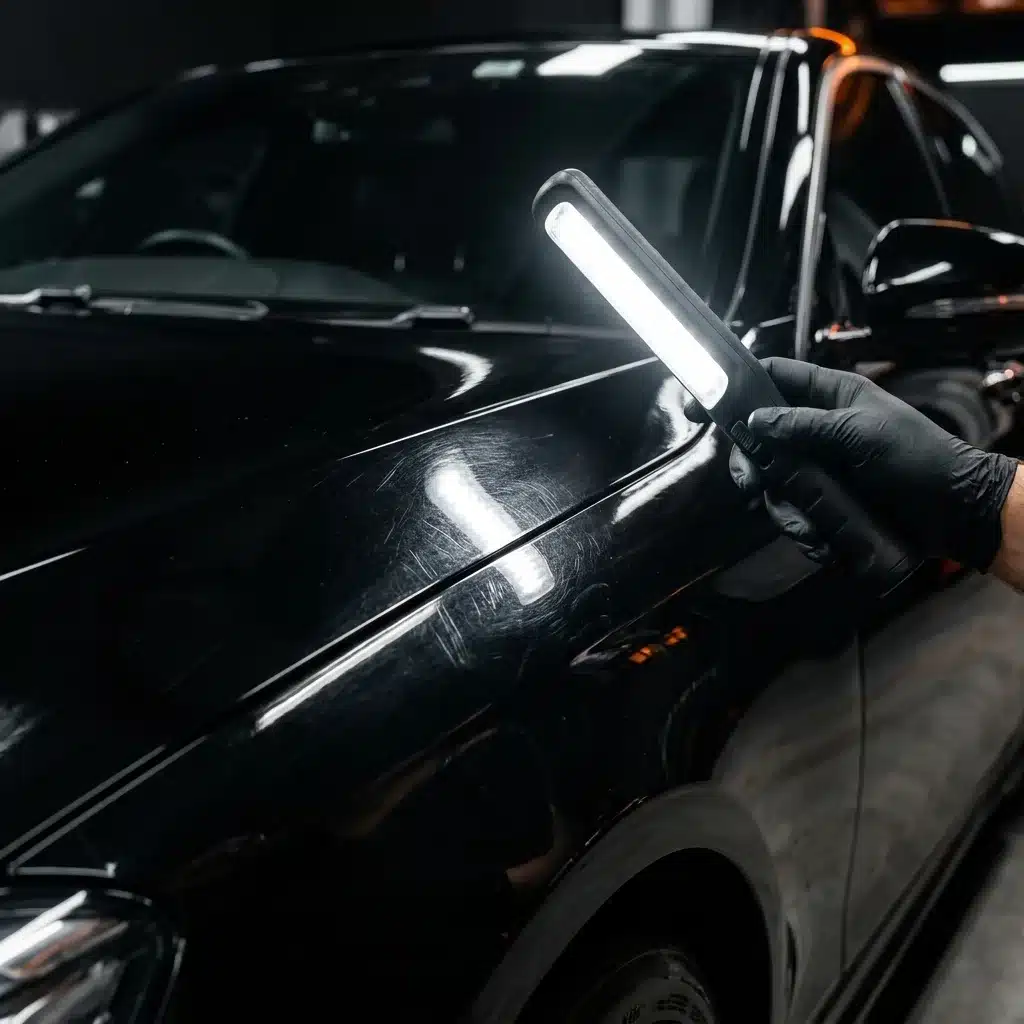
This is where most owners have their first surprise. The car is positioned under controlled studio lighting (halogen or LED inspection lights) and every panel is examined at multiple angles. The lighting reveals every swirl mark, buffer trail, scratch, dust nib, and texture variation that showroom lighting conceals.
Paint depth is measured on every panel using a thickness gauge. This establishes a baseline record of the factory paint thickness across the entire vehicle, which is valuable for future reference and guides how aggressively the correction stage can be approached. For Tesla owners in particular, this measurement is critical because Tesla factory paint is measurably thinner than most other brands.
Stage 3: Paint Correction
Based on the inspection findings, the appropriate level of paint correction is applied.
| Factory Defect | How Common on New Cars | Correction Approach |
|---|---|---|
| Swirl marks from factory and dealer handling | Very common (virtually every new car) | Single or multi-stage machine polish |
| Buffer trails (holograms) from factory finishing | Common on dark colours | Finishing polish with soft pad |
| Random isolated deep scratches (RIDS) | Moderate (transport and dealer handling) | Spot correction with targeted compound |
| Dust nibs (particles trapped in clear coat) | Moderate | Wet sanding of individual nibs, then polish |
| Orange peel (textured clear coat surface) | Common (varies by manufacturer) | Wet sanding to level texture, then multi-stage polish |
| Transport film adhesive residue | Common | Chemical removal then polish |
New car correction is typically lighter than correcting a car with years of accumulated damage because the defects are surface-level and the clear coat is at its maximum thickness. The goal is not to remove large amounts of material but to refine the factory finish to a level that the production process could not achieve.
For detailed information on what correction involves and costs, read the cut and polish cost guide.
Stage 4: Protection Application
Once the paint is corrected to a flawless finish, protection is applied immediately. This is the most critical window because the corrected paint is now in the best condition it will ever be in. Every day that passes without protection allows UV, contaminants, and environmental exposure to begin degrading the finish.
Ceramic coating is the most popular protection choice for new cars. It chemically bonds to the corrected clear coat and provides UV resistance, chemical protection against bird droppings and tree sap, hydrophobic water beading, and enhanced gloss depth for two to seven years depending on the product tier. Read is ceramic coating worth it and how long ceramic coating lasts for the full value analysis.
Graphene coating offers similar benefits to ceramic with a slicker feel and stronger water beading. The best graphene coating for cars guide covers when graphene is the better choice.
Paint protection film (PPF) provides physical protection that coatings cannot: stone chip resistance, scratch absorption, and self-healing properties. Full car PPF in gloss or matte is our recommendation for any new car driven daily, providing complete coverage for owners who want total protection. The PPF vs ceramic coating comparison explains when to choose each or both.
The ideal new car package is front-end PPF on high-impact panels with ceramic or graphene coating over the entire car (including on top of the PPF). This combination delivers both physical and chemical protection across every surface. Read the complete how to protect car paint guide for all options ranked.
Stage 5: Interior Detailing
A new car interior also benefits from professional attention at delivery. Dealer preparation leaves chemical residue on leather and vinyl surfaces, and factory-applied coatings on glass create haze that affects visibility.
Professional interior detailing on a new car includes cleaning and conditioning all leather surfaces (removing factory chemicals and applying proper leather protection), cleaning all interior glass to remove factory coatings and dealer spray residue, dressing plastic and vinyl trim with UV-protective products, and vacuuming all carpets and mats to remove factory dust and packaging debris.
This is not about making a new car cleaner. It is about replacing the factory’s generic chemical treatments with professional-grade products that protect the interior surfaces properly from day one.
Why Timing Matters: The First Few Weeks
The first few weeks of ownership represent the most important window for new car detailing and protection. Here is why.
Paint is at maximum thickness. The factory clear coat has never been polished, corrected, or worn by weather. There is maximum material available for correction, which means even factory defects can be removed with minimal clear coat loss.
No environmental damage has accumulated yet. The paint has not yet absorbed UV, had bird droppings etch into the surface, or developed water spots from mineral deposits. Applying protection now means these threats are blocked from the very first day.
The correction required is minimal. Factory defects are surface-level. Correcting them on a new car takes less time and removes less material than correcting years of accumulated damage. This means the correction is gentler, faster, and less expensive than it would be if you wait.
Protection locks in the best possible starting point. Once the factory defects are removed and the paint is at its absolute best, ceramic coating or PPF locks in that condition for years. The paint never goes through the degradation cycle that unprotected paint experiences.
For the full argument on timing and protection options, read the new car paint protection guide.
What About the Dealer’s “Paint Protection” Package?
Many dealers offer paint protection packages at the point of sale, often at a significant price. These packages usually involve a spray-on sealant applied by dealer staff in the service bay.
The problems with dealer paint protection are significant. The product is typically a basic sealant or spray coating that provides a fraction of the durability and performance of a professional ceramic coating. The application is done over uncorrected paint, meaning all the factory defects (swirls, buffer marks, dust nibs) are sealed in permanently. The application is performed by general service staff, not trained detailing professionals, in a service bay rather than a controlled environment.
A professional new car detail at a specialist studio corrects the factory defects first, then applies a significantly higher-grade protection product in controlled conditions. The result is dramatically better in both immediate visual quality and long-term protection performance.
For a full comparison of protection options and value, read ceramic coating vs wax and the ceramic coating cost Sydney guide.